English
 Arabic
 French
 Spanish
 Portuguese
 Deutsch
 Turkish
 Dutch
 Italiano
 Russian
 Romaian
 Portuguese (Brazil)
 Greek
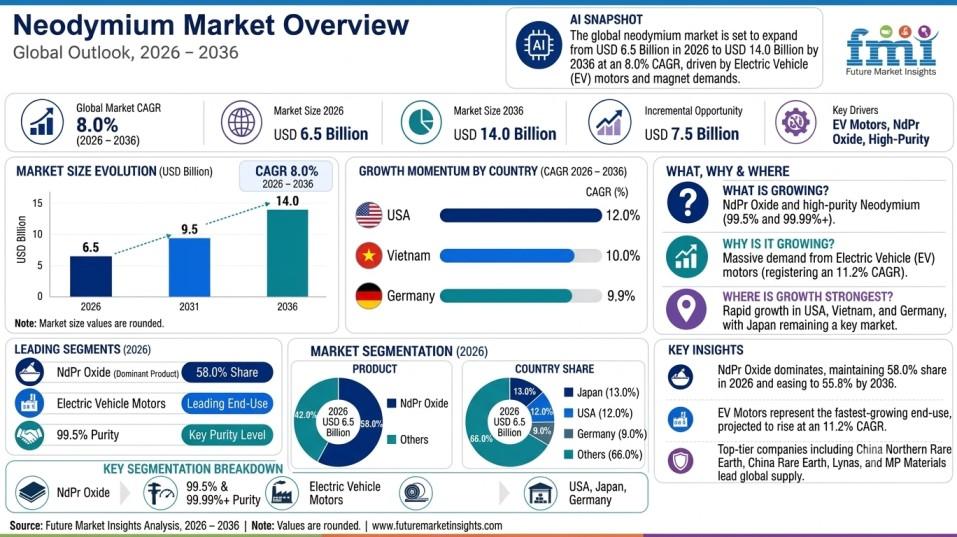
Neodymium Market USD 14.0 Billion by 2036 at 8.0% CAGR; China Northern Rare Earth Group, MP Materials
Networking |
2026-11-26 13:48:14

The Skin Whitening Products Market includes a diverse range of skincare formats, ingredients, distribution channels, and consumer groups. Demand is influenced by interest in addressing uneven skin tone, dark spots, and other visible forms of discoloration. Differences in climate, shopping habits, skincare routines, product regulations, and consumer purchasing power also shape the market across regions.
Market Research Future reported a market valuation of USD 10.31 billion in 2023 and projects the Skin Whitening Products Market to reach USD 15.5 billion by 2035. The forecast indicates a CAGR of 3.46% from 2025 to 2035. The availability of different product formats and continuing interest in pigmentation-focused skincare are among the factors supporting market development. See the Skin Whitening Products Market report for further details.
Creams and lotions are used in daily skincare routines and may combine moisturization with ingredients intended to improve the appearance of discoloration. Their appeal can depend on texture, formulation, price, and suitability for different skin types.
Serums provide another format for targeted skincare ingredients. Consumers may select them for specific concerns, but results depend on formulation quality, appropriate use, and individual skin characteristics.
Cleansers are designed primarily to remove impurities, oil, and makeup. Some are marketed as tone-evening products, but they should be used according to their intended purpose and should not be expected to replace treatments for medical skin conditions.
Masks and related formats offer additional options for consumers seeking complementary skincare steps. Their suitability varies according to ingredients and usage instructions.
The market includes products formulated with synthetic ingredients, naturally derived components, and combinations of both. Ingredient preferences may influence purchasing decisions, but consumers should not assume that a natural formulation is automatically safer or more effective.
Product transparency, evidence supporting claims, and compliance with relevant regulations are important across all formulation types.
Specialty beauty retailers offer product variety and in-person assistance. Pharmacies can provide access to skincare products and guidance on appropriate use. Supermarkets and other general retailers support convenient shopping, while online platforms provide broad selection, home delivery, and repeat-order options.
Market demand varies across Asia-Pacific, North America, Europe, Latin America, and the Middle East and Africa. Differences in consumer preferences, skincare awareness, product availability, disposable income, and regulatory frameworks can influence regional performance.
Responsible marketing is important in every region. Products should be presented around evidence-based skin health and pigmentation concerns, without reinforcing harmful stereotypes or discriminatory beauty ideals.
The market faces challenges involving product safety, misleading claims, counterfeit goods, ingredient restrictions, and changing consumer expectations. Opportunities include improved formulations, transparent labeling, convenient distribution, and products designed for specific skincare needs.
1. How is the Skin Whitening Products Market segmented?
It can be analyzed by product type, formulation or ingredient approach, distribution channel, consumer group, and geographic region.
2. Which distribution channels sell these products?
Common channels include online retailers, specialty beauty stores, pharmacies, supermarkets, and other retail outlets.
3. What factors influence regional market demand?
Consumer preferences, purchasing power, skincare awareness, product availability, cultural context, and local regulations can all affect demand.