English
 Arabic
 French
 Spanish
 Portuguese
 Deutsch
 Turkish
 Dutch
 Italiano
 Russian
 Romaian
 Portuguese (Brazil)
 Greek
Miticides for Fruits and Vegetables Market Size, Industry Trends - 2030
Other |
2026-11-10 05:43:49
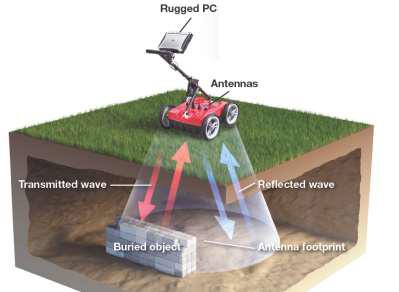
When technology evolution is the centerpiece of a group discussion, debate quickly turns to whether artificial intelligence and 3D imaging finally solve radar's historic interpretation bottleneck. Across the Ground Penetrating Radar Market, traditional single-channel systems produced complex hyperbolic curves that only seasoned geophysicists could decipher reliably. Reviewing Ground Penetrating Radar research shows a decisive shift toward multi-frequency stepped-frequency continuous-wave antennas, GPS-integrated 3D tomography, and machine-learning algorithms that automatically classify pipes, rebar, and voids in real time. In a group setting, participants can debate whether automated AI object detection empowers general construction crews to run scans independently—or whether over-reliance on automated software risks missing subtle subsurface hazards in complex soils.
Multi-sensor fusion and cloud collaboration represent equally transformative advances in field workflows. Modern survey carts and vehicle-mounted arrays pair radar antennas with electromagnetic locators, LiDAR scanners, and high-precision GNSS receivers, overlaying underground utilities directly onto augmented-reality tablets or Building Information Modeling (BIM) twins. Meanwhile, cloud portals allow field technicians to stream raw datasets back to senior geophysicists for instant second opinions. Discussants can evaluate how open data formats and digital-twin integration bridge the gap between field data collection and long-term municipal asset registries.
1. How is artificial intelligence improving ground penetrating radar systems? AI algorithms automate hyperbola recognition, filter background signal clutter, and classify buried utilities, rebar, and voids into intuitive 3D visualizations.
2. What advantage do multi-frequency radar antennas offer over single-frequency units? Multi-frequency antennas simultaneously capture high-resolution shallow details and deeper subsurface targets in a single pass, eliminating the need to swap hardware on site.
➤➤➤Explore MRFR’s Related Ongoing Coverage In Semiconductor Industry:
Flexible Hybrid Electronics Market
Flexible Printed Electronic Market
Foreign Exchange Service Market