English
 Arabic
 French
 Spanish
 Portuguese
 Deutsch
 Turkish
 Dutch
 Italiano
 Russian
 Romaian
 Portuguese (Brazil)
 Greek
Window Replacement Bend Oregon Guide
Home |
2026-11-05 12:24:17
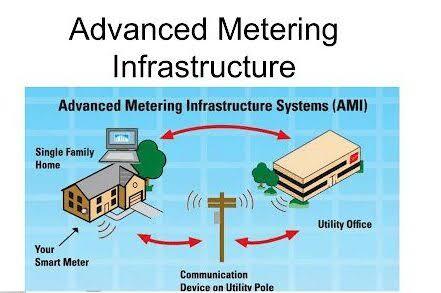
When technology evolution is the centerpiece of a group discussion, debate quickly turns to communication architectures and edge computing. Within the Advanced Metering Infrastructure Market, utilities traditionally relied on radio-frequency mesh or power-line communication networks, which require deploying and maintaining proprietary collector gateways across neighborhoods. Reviewing Advanced Metering Infrastructure research highlights a decisive shift toward standards-based cellular IoT—including NB-IoT, LTE-M, and 5G—alongside Wi-SUN mesh networks and edge-embedded artificial intelligence. Cellular connectivity allows utilities in emerging markets to leapfrog proprietary backhaul buildouts by leveraging existing telecom towers, while AI-optimized distribution analytics can reduce global electricity losses by 8% to 10% through predictive fault detection and phase balancing. In a group setting, participants can debate whether relying on public cellular networks lowers total ownership costs or exposes critical utility infrastructure to telecom carrier coverage gaps.
Embedded edge intelligence and cloud-native meter data management also raise important questions around data latency, interoperability, and cybersecurity. Modern next-generation meters run containerized edge applications capable of detecting high-impedance faults, downed conductors, or abnormal water leaks locally within seconds rather than waiting for batch cloud uploads. Yet multi-vendor interoperability remains essential so utilities are not locked into proprietary meter protocols over 15-to-20-year asset lifecycles. Discussants can evaluate how open communication standards, zero-trust device authentication, and automated over-the-air firmware updates protect grid integrity as meters evolve into intelligent edge sensors.