English
 Arabic
 French
 Spanish
 Portuguese
 Deutsch
 Turkish
 Dutch
 Italiano
 Russian
 Romaian
 Portuguese (Brazil)
 Greek
The Ultimate Small Paper Cup Guide For Everyday Drinks
Food |
2026-10-21 09:47:46
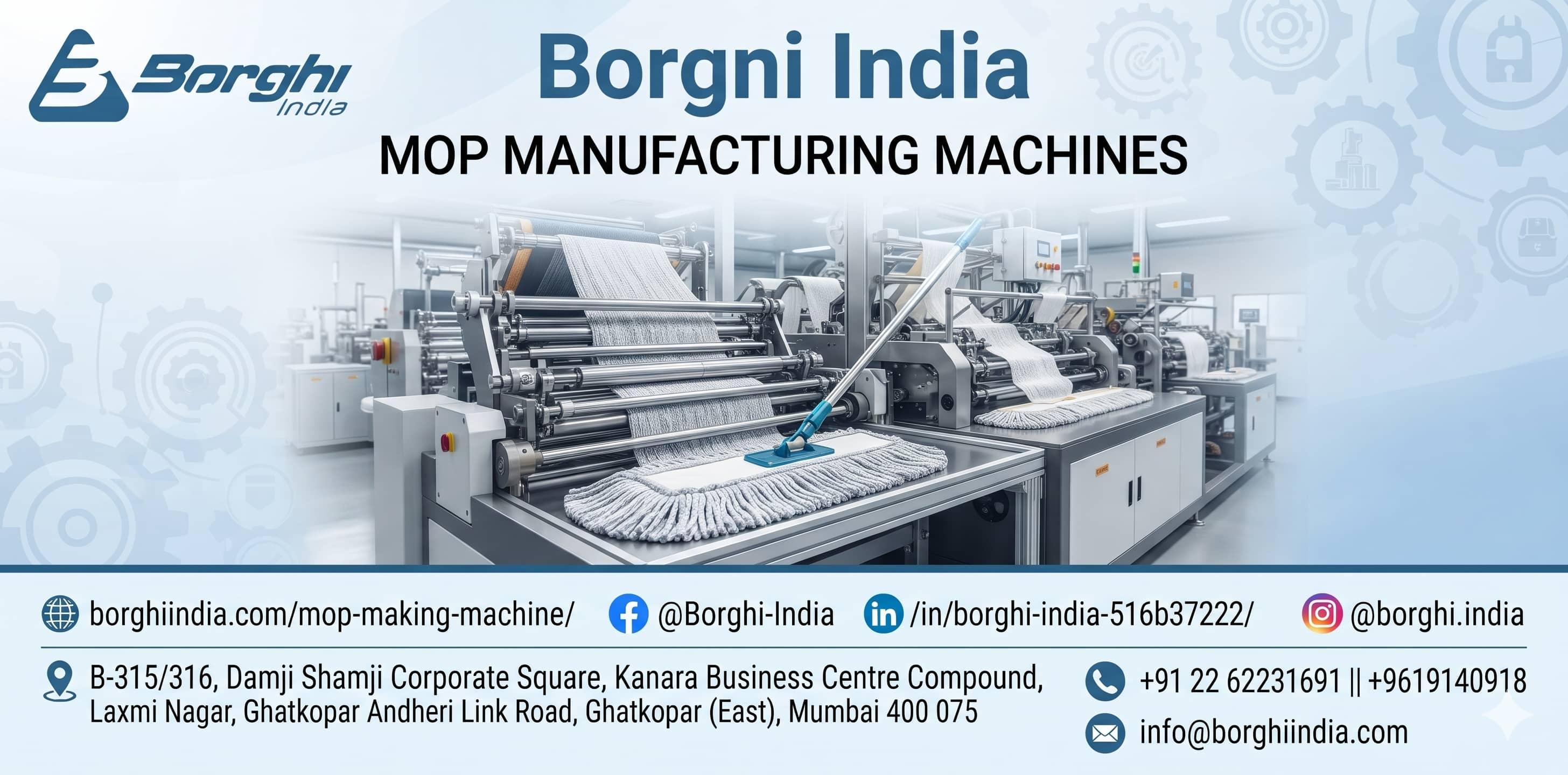
The global demand for residential, commercial, and industrial cleaning supplies continues to grow at a steady pace. As hygiene standards rise across households, hospitals, offices, and manufacturing plants, the need for durable and affordable cleaning tools has surged. At the center of this supply chain are mop manufacturing machines, which enable businesses to produce high volumes of consistent, reliable mops while minimizing manual labor costs. Whether a manufacturer focuses on traditional cotton string mops, modern microfiber flat mops, or spin mops, investing in specialized machinery transforms raw yarn and plastic components into market-ready cleaning products.
Types of Mop Manufacturing Machines
Modern production facilities rely on a combination of automated and semi-automatic equipment tailored to specific mop designs. Selecting the right machinery depends on target output, raw material preferences, and budget constraints.
Mop Yarn Twisting and Winding Machines: These machines process raw cotton, polyester, or microfiber threads into uniform, tightly twisted yarn bundles. Consistent yarn tension prevents fraying and ensures high water absorbency in the finished mop head.
Mop Head Cutting and Folding Machines: Automated cutters measure and slice continuous yarn rolls into exact lengths before folding them into balanced loops or strips, eliminating material waste and uneven mop heads.
Ultrasonic Welding and Stitching Machines: Used heavily for microfiber and flat mops, ultrasonic welders bond synthetic fabric layers seamlessly without thread, while heavy-duty industrial sewing machines reinforce cotton mop bands for maximum durability.
Plastic Injection Molding Machines: Spin mops, mop buckets, wringers, and ergonomic handle grips require precision-molded plastic parts. Injection molding units produce thousands of identical plastic housings and swivel joints per shift.
Automated Mop Assembly Lines: Integrated assembly systems combine the mop head, plastic socket, and metal or fiberglass handle into a single finished unit, followed by automated labeling and shrink-wrapping.
Key Benefits of Investing in Automated Mop Machinery
Transitioning from manual assembly to dedicated mop manufacturing machines offers measurable operational and financial advantages for small startups and large-scale factories alike.
Higher Production Output: Automated machines operate continuously at high speeds, producing hundreds of mop heads per hour compared to a fraction of that output through manual labor.
Uniform Product Quality: Precision sensors and programmable settings guarantee that every mop has the exact same weight, yarn length, stitching strength, and fitting alignment, reducing customer returns.
Reduced Labor and Material Costs: Automation minimizes human error, lowers reliance on large manual workforces, and optimizes raw material usage by cutting yarn and fabric to exact specifications.
Versatility Across Product Lines: Many modern machines feature adjustable molds and programmable controls, allowing manufacturers to switch easily between wet mops, dry dust mops, microfiber pads, and heavy-duty industrial mops.
Improved Workplace Safety: Enclosed cutting blades, automated feeding mechanisms, and ergonomic workstations protect operators from repetitive strain and mechanical injuries.
Essential Factors to Consider Before Purchasing
Choosing the ideal equipment requires careful evaluation of both current production goals and long-term expansion plans.
Production Capacity Requirements: Match the machine's hourly output rating with existing order volumes while leaving room for future market growth.
Raw Material Compatibility: Verify that the equipment can handle specific fiber blends, such as virgin cotton, recycled yarn, blended poly-cotton, or ultra-fine microfiber.
Power Consumption and Floor Space: Assess factory layout, electrical load capacity, and compressed air requirements to ensure smooth installation and energy-efficient operation.
Maintenance and Spare Parts Availability: Opt for machinery built with durable alloy components, user-friendly control panels, and readily accessible replacement parts to prevent costly production downtime.
Frequently Asked Questions (FAQs)
1. What raw materials are used in mop manufacturing machines?
Most machines process cotton yarn, polyester, blended poly-cotton fibers, microfiber fabrics, polypropylene (PP) granules for plastic sockets and buckets, and steel or aluminum tubes for handles.
2. Can a single machine produce different types of mops?
While specialized machines handle distinct tasks like yarn cutting or plastic molding, many modern mop assembly and stitching machines offer adjustable settings that accommodate multiple sizes and styles of wet and dry mops.
3. How much space is required to set up a small mop manufacturing unit?
A small to medium semi-automatic setup typically requires between 1,000 and 2,500 square feet to house raw material storage, production machinery, assembly tables, and finished goods packaging.
4. Are mop manufacturing machines easy to operate?
Yes, most contemporary machines feature programmable logic controller (PLC) touchscreens and automated safety sensors, allowing operators to learn basic controls, speed adjustments, and routine maintenance quickly.
5. What is the main difference between semi-automatic and fully automatic mop machines?
Semi-automatic machines require manual loading and transfer of components between stages mop manufacturing machines, making them ideal for lower budgets, whereas fully automatic lines handle feeding, cutting, stitching, assembly, and packing with minimal human intervention.
Follow Us More Social Media links:-
Follow Us On Facebook:- https://www.facebook.com/people/Borghi-India/100075660567841/
Follow Us On LinkedIn:- https://www.linkedin.com/in/borghi-india-516b37222/
Follow Us On Instagram:- https://www.instagram.com/borghi.india/
Address:- B-315/316, Damji Shamji Corporate Square, Kanara Business Centre Compound, Laxmi Nagar,Ghatkopar Andheri Link Road, Ghatkopar (East), Mumbai 400 075
Phone: +91 22 62231691 || +9619140918
Email: info@borghiindia.com