English
 Arabic
 French
 Spanish
 Portuguese
 Deutsch
 Turkish
 Dutch
 Italiano
 Russian
 Romaian
 Portuguese (Brazil)
 Greek
Modern Technology for a More Comfortable Home
Other |
2026-11-20 16:54:44
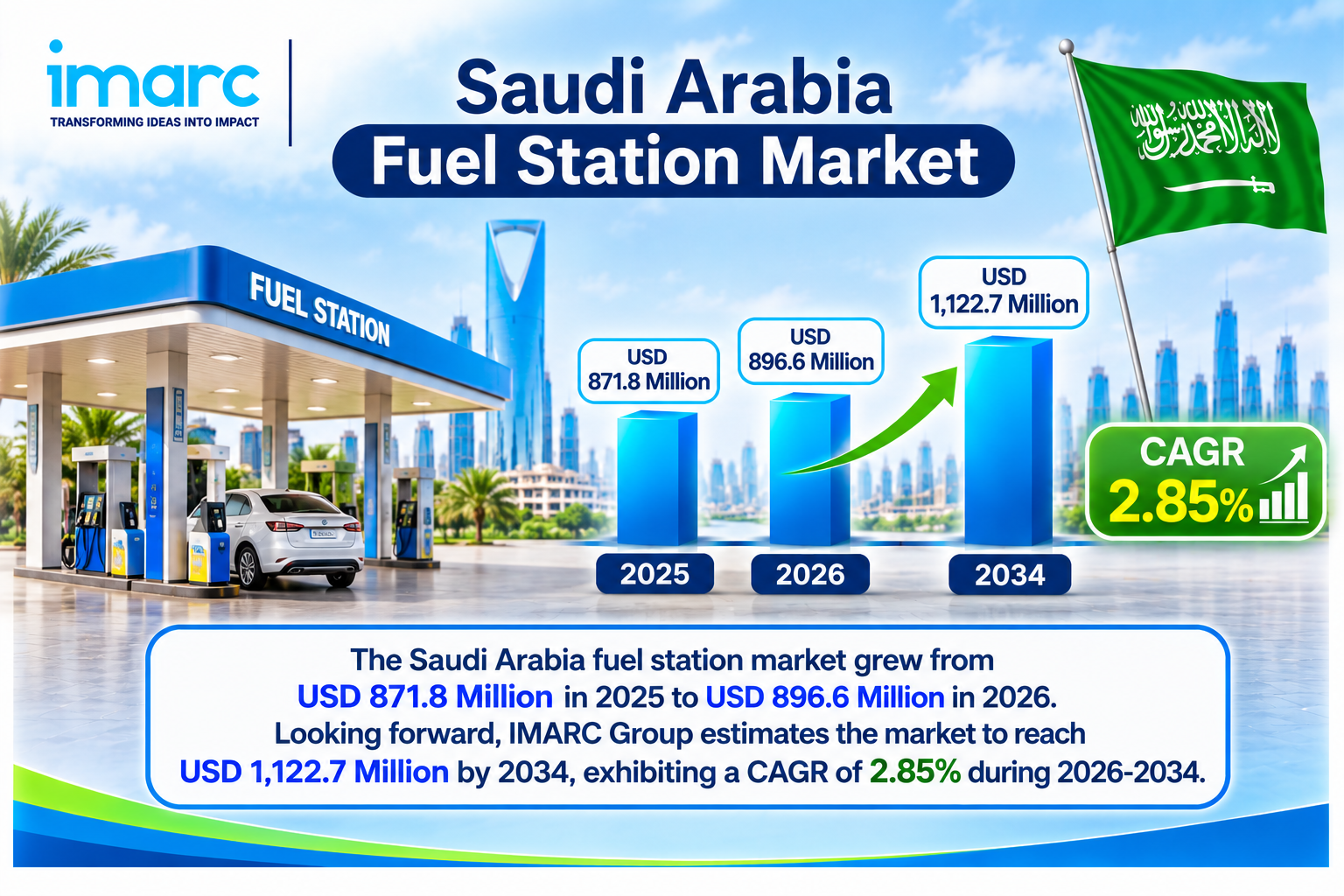
IMARC Group, a leading global market research and management consulting firm, has published its latest market intelligence report on the Saudi Arabia fuel station market. The market increased from 𝐔𝐒𝐃 𝟖𝟕𝟏.𝟖 𝐌𝐢𝐥𝐥𝐢𝐨𝐧 in 2025 to 𝐔𝐒𝐃 𝟖𝟗𝟔.𝟔 𝐌𝐢𝐥𝐥𝐢𝐨𝐧 in 2026 and is projected to reach 𝐔𝐒𝐃 𝟏,𝟏𝟐𝟐.𝟕 𝐌𝐢𝐥𝐥𝐢𝐨𝐧 by 2034, exhibiting a 𝐂𝐀𝐆𝐑 𝐨𝐟 𝟐.𝟖𝟓% during 2026-2034, driven by rising vehicle ownership, expanding road infrastructure, and Vision 2030 liberalization of the energy and fuel distribution sector.
Fuel stations are becoming more than fueling points. Operators are integrating convenience stores, car washes, food outlets, and digital payments, turning forecourts into service hubs that capture footfall beyond fuel sales. The market is forecast to add approximately USD 226 Million in incremental value between 2026 and 2034, with three structural forces shaping this trajectory: growing private mobility, logistics and highway expansion, and a regulatory push to modernize ageing stations.
𝐒𝐚𝐮𝐝𝐢 𝐀𝐫𝐚𝐛𝐢𝐚 𝐅𝐮𝐞𝐥 𝐒𝐭𝐚𝐭𝐢𝐨𝐧 𝐌𝐚𝐫𝐤𝐞𝐭 𝐚𝐭 𝐚 𝐆𝐥𝐚𝐧𝐜𝐞:
𝐇𝐨𝐰 𝐃𝐢𝐠𝐢𝐭𝐚𝐥𝐢𝐳𝐚𝐭𝐢𝐨𝐧 𝐚𝐧𝐝 𝐂𝐥𝐞𝐚𝐧 𝐄𝐧𝐞𝐫𝐠𝐲 𝐚𝐫𝐞 𝐑𝐞𝐬𝐡𝐚𝐩𝐢𝐧𝐠 𝐭𝐡𝐞 𝐅𝐮𝐭𝐮𝐫𝐞 𝐨𝐟 𝐭𝐡𝐞 𝐒𝐚𝐮𝐝𝐢 𝐀𝐫𝐚𝐛𝐢𝐚 𝐅𝐮𝐞𝐥 𝐒𝐭𝐚𝐭𝐢𝐨𝐧 𝐌𝐚𝐫𝐤𝐞𝐭
𝐆𝐫𝐚𝐛 𝐚 𝐬𝐚𝐦𝐩𝐥𝐞 𝐏𝐃𝐅 𝐨𝐟 𝐭𝐡𝐢𝐬 𝐫𝐞𝐩𝐨𝐫𝐭: https://www.imarcgroup.com/saudi-arabia-fuel-station-market/requestsample
𝐒𝐚𝐮𝐝𝐢 𝐀𝐫𝐚𝐛𝐢𝐚 𝐅𝐮𝐞𝐥 𝐒𝐭𝐚𝐭𝐢𝐨𝐧 𝐌𝐚𝐫𝐤𝐞𝐭 𝐓𝐫𝐞𝐧𝐝𝐬 𝐚𝐧𝐝 𝐃𝐫𝐢𝐯𝐞𝐫𝐬:
Vehicle ownership is the foundation of fuel demand. A young, aspirational population with rising disposable incomes and easier access to vehicle financing is expanding private mobility across the Kingdom. The entry of international automotive brands and government support for automotive manufacturing are further widening access to private vehicles, which requires a broader and more efficient fueling network.
Urbanization and infrastructure are extending the network. With around 92% of the population living in urban areas, congestion in major cities is driving demand for accessible, well-equipped stations, while new highways and transport corridors are opening fueling opportunities in previously underserved areas. Saudi Arabia fuel station market outlook is further supported by government plans to invest SR 10 billion in 18 new logistics zones, which are expected to boost freight activity and reinforce the need for well-distributed stations along key routes.
Modernization is becoming a regulatory priority. An industry report found that 440 of 1,219 petrol stations along Saudi highways failed to meet operational and safety standards, pushing operators to phase out traditional formats in favour of automated, safer, and more convenient stations. At the same time, electronic payments rose to 70% of total retail payments in 2023, up from 62% in 2022, reinforcing the shift toward digital fuel retail.
𝐆𝐨𝐯𝐞𝐫𝐧𝐦𝐞𝐧𝐭 𝐒𝐜𝐡𝐞𝐦𝐞𝐬 𝐚𝐧𝐝 𝐕𝐢𝐬𝐢𝐨𝐧 𝟐𝟎𝟑𝟎 𝐈𝐧𝐢𝐭𝐢𝐚𝐭𝐢𝐯𝐞𝐬 𝐃𝐫𝐢𝐯𝐢𝐧𝐠 𝐃𝐞𝐦𝐚𝐧𝐝:
𝐒𝐚𝐮𝐝𝐢 𝐀𝐫𝐚𝐛𝐢𝐚 𝐅𝐮𝐞𝐥 𝐒𝐭𝐚𝐭𝐢𝐨𝐧 𝐈𝐧𝐝𝐮𝐬𝐭𝐫𝐲 𝐒𝐞𝐠𝐦𝐞𝐧𝐭𝐚𝐭𝐢𝐨𝐧:
𝐓𝐡𝐞 𝐫𝐞𝐩𝐨𝐫𝐭 𝐡𝐚𝐬 𝐬𝐞𝐠𝐦𝐞𝐧𝐭𝐞𝐝 𝐭𝐡𝐞 𝐦𝐚𝐫𝐤𝐞𝐭 𝐢𝐧𝐭𝐨 𝐭𝐡𝐞 𝐟𝐨𝐥𝐥𝐨𝐰𝐢𝐧𝐠 𝐜𝐚𝐭𝐞𝐠𝐨𝐫𝐢𝐞𝐬:
𝐁𝐫𝐞𝐚𝐤𝐮𝐩 𝐁𝐲 𝐅𝐮𝐞𝐥 𝐓𝐲𝐩𝐞:
Petrol leads with around 49.8% of market share in 2025, supported by high vehicle ownership, a long history of gasoline-powered vehicles, and well-established storage, distribution, and dispensing infrastructure. Although alternative fuels and electromobility are gaining popularity, the transition remains gradual, and petrol is expected to maintain its significance over the medium term.
𝐁𝐫𝐞𝐚𝐤𝐮𝐩 𝐁𝐲 𝐄𝐧𝐝 𝐔𝐬𝐞:
Road transport vehicles lead with around 65.4% of market share in 2025, driven by the high rate of car ownership, the Kingdom's extensive road network, and heavy-duty trucks moving goods across cities and industrial zones. As alternative fuels gain traction, road transport will also influence the pace of transition within the retail fuel network.
𝐁𝐫𝐞𝐚𝐤𝐮𝐩 𝐁𝐲 𝐑𝐞𝐠𝐢𝐨𝐧:
The Northern and Central Region accounts for over 45.2% share in 2025, supported by population growth, economic activity, and the concentration of passenger cars, commercial fleets, and government transport around Riyadh. The region's road connections to neighbouring countries and its logistics networks make it a prime market for fuel retailers looking to expand their presence.
𝐂𝐨𝐦𝐩𝐞𝐭𝐢𝐭𝐢𝐯𝐞 𝐋𝐚𝐧𝐝𝐬𝐜𝐚𝐩𝐞:
The Saudi Arabia fuel station market is becoming more competitive as liberalization policies, private sector involvement, and international operator entry accelerate change. Operators are expanding network coverage in urban and rural areas, upgrading infrastructure, and adding convenience stores, automobile services, and digital payment facilities to attract and retain customers.
Competition is increasingly driven by service quality, fuel quality, automation, and clean energy solutions. Companies are differentiating on customer experience, and operational excellence and innovation are becoming critical to success as consumers move toward convenience and technology-based services.
𝐋𝐚𝐭𝐞𝐬𝐭 𝐍𝐞𝐰𝐬 𝐚𝐧𝐝 𝐃𝐞𝐯𝐞𝐥𝐨𝐩𝐦𝐞𝐧𝐭𝐬 𝐢𝐧 𝐭𝐡𝐞 𝐒𝐚𝐮𝐝𝐢 𝐀𝐫𝐚𝐛𝐢𝐚 𝐅𝐮𝐞𝐥 𝐒𝐭𝐚𝐭𝐢𝐨𝐧 𝐌𝐚𝐫𝐤𝐞𝐭:
𝐌𝐚𝐫𝐤𝐞𝐭 𝐂𝐡𝐚𝐥𝐥𝐞𝐧𝐠𝐞𝐬 𝐚𝐧𝐝 𝐑𝐞𝐬𝐭𝐫𝐚𝐢𝐧𝐭𝐬:
𝐖𝐡𝐚𝐭 𝐃𝐨𝐞𝐬 𝐓𝐡𝐞 𝐅𝐮𝐥𝐥 𝐑𝐞𝐩𝐨𝐫𝐭 𝐂𝐨𝐯𝐞𝐫?
If you are tracking the Saudi Arabia fuel station market for investment decisions, market entry planning, competitive benchmarking, or strategic advisory, IMARC Group's report gives you everything in one place:
𝐍𝐨𝐭𝐞: 𝐈𝐟 𝐲𝐨𝐮 𝐫𝐞𝐪𝐮𝐢𝐫𝐞 𝐬𝐩𝐞𝐜𝐢𝐟𝐢𝐜 𝐝𝐞𝐭𝐚𝐢𝐥𝐬, 𝐝𝐚𝐭𝐚, 𝐨𝐫 𝐢𝐧𝐬𝐢𝐠𝐡𝐭𝐬 𝐭𝐡𝐚𝐭 𝐚𝐫𝐞 𝐧𝐨𝐭 𝐜𝐮𝐫𝐫𝐞𝐧𝐭𝐥𝐲 𝐢𝐧𝐜𝐥𝐮𝐝𝐞𝐝 𝐢𝐧 𝐭𝐡𝐞 𝐬𝐜𝐨𝐩𝐞 𝐨𝐟 𝐭𝐡𝐢𝐬 𝐫𝐞𝐩𝐨𝐫𝐭, 𝐰𝐞 𝐚𝐫𝐞 𝐡𝐚𝐩𝐩𝐲 𝐭𝐨 𝐚𝐜𝐜𝐨𝐦𝐦𝐨𝐝𝐚𝐭𝐞 𝐲𝐨𝐮𝐫 𝐫𝐞𝐪𝐮𝐞𝐬𝐭. 𝐀𝐬 𝐩𝐚𝐫𝐭 𝐨𝐟 𝐨𝐮𝐫 𝐜𝐮𝐬𝐭𝐨𝐦𝐢𝐳𝐚𝐭𝐢𝐨𝐧 𝐬𝐞𝐫𝐯𝐢𝐜𝐞, 𝐰𝐞 𝐰𝐢𝐥𝐥 𝐠𝐚𝐭𝐡𝐞𝐫 𝐚𝐧𝐝 𝐩𝐫𝐨𝐯𝐢𝐝𝐞 𝐭𝐡𝐞 𝐚𝐝𝐝𝐢𝐭𝐢𝐨𝐧𝐚𝐥 𝐢𝐧𝐟𝐨𝐫𝐦𝐚𝐭𝐢𝐨𝐧 𝐲𝐨𝐮 𝐧𝐞𝐞𝐝, 𝐭𝐚𝐢𝐥𝐨𝐫𝐞𝐝 𝐭𝐨 𝐲𝐨𝐮𝐫 𝐬𝐩𝐞𝐜𝐢𝐟𝐢𝐜 𝐫𝐞𝐪𝐮𝐢𝐫𝐞𝐦𝐞𝐧𝐭𝐬. 𝐏𝐥𝐞𝐚𝐬𝐞 𝐥𝐞𝐭 𝐮𝐬 𝐤𝐧𝐨𝐰 𝐲𝐨𝐮𝐫 𝐞𝐱𝐚𝐜𝐭 𝐧𝐞𝐞𝐝𝐬, 𝐚𝐧𝐝 𝐰𝐞 𝐰𝐢𝐥𝐥 𝐞𝐧𝐬𝐮𝐫𝐞 𝐭𝐡𝐞 𝐫𝐞𝐩𝐨𝐫𝐭 𝐢𝐬 𝐮𝐩𝐝𝐚𝐭𝐞𝐝 𝐚𝐜𝐜𝐨𝐫𝐝𝐢𝐧𝐠𝐥𝐲 𝐭𝐨 𝐦𝐞𝐞𝐭 𝐲𝐨𝐮𝐫 𝐞𝐱𝐩𝐞𝐜𝐭𝐚𝐭𝐢𝐨𝐧𝐬.
𝐊𝐞𝐲 𝐐𝐮𝐞𝐬𝐭𝐢𝐨𝐧𝐬 𝐓𝐡𝐢𝐬 𝐑𝐞𝐩𝐨𝐫𝐭 𝐀𝐧𝐬𝐰𝐞𝐫𝐬
𝐀𝐛𝐨𝐮𝐭 𝐔𝐬
IMARC Group is a global management consulting firm that helps the world's most ambitious changemakers to create a lasting impact. The company provides a comprehensive suite of market entry and expansion services. IMARC offerings include thorough market assessment, feasibility studies, company incorporation assistance, factory setup support, regulatory approvals and licensing navigation, branding, marketing and sales strategies, competitive landscape and benchmarking analyses, pricing and cost research, and procurement research.
𝐌𝐞𝐝𝐢𝐚 𝐚𝐧𝐝 𝐒𝐚𝐥𝐞𝐬 𝐂𝐨𝐧𝐭𝐚𝐜𝐭
𝐈𝐌𝐀𝐑𝐂 𝐆𝐫𝐨𝐮𝐩
𝐄𝐦𝐚𝐢𝐥: sales@imarcgroup.com
𝐔𝐧𝐢𝐭𝐞𝐝 𝐒𝐭𝐚𝐭𝐞𝐬: +1-201-971-6302
𝐈𝐧𝐝𝐢𝐚: +91-120-433-0800
𝐔𝐧𝐢𝐭𝐞𝐝 𝐊𝐢𝐧𝐠𝐝𝐨𝐦: +44-753-714-6104