English
 Arabic
 French
 Spanish
 Portuguese
 Deutsch
 Turkish
 Dutch
 Italiano
 Russian
 Romaian
 Portuguese (Brazil)
 Greek
Menopause Care Gains Attention Across the GCC
Other |
2026-11-06 13:40:43
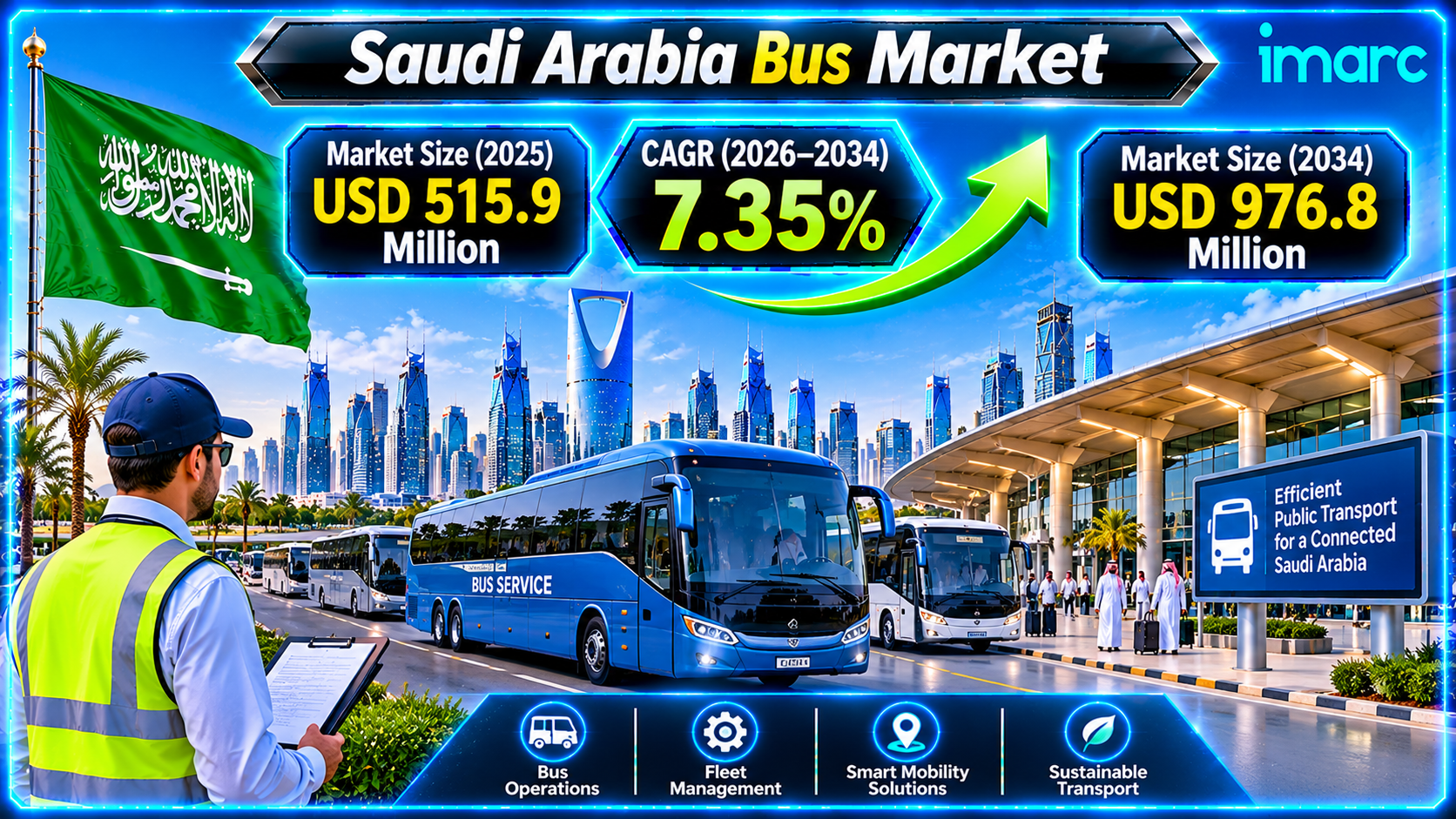
IMARC Group, a leading global market research and management consulting firm, has published its latest market intelligence report on the Saudi Arabia bus market. The Saudi Arabia bus market increased from 𝐔𝐒𝐃 𝟓𝟏𝟓.𝟗 𝐌𝐢𝐥𝐥𝐢𝐨𝐧 in 2025 to 𝐔𝐒𝐃 𝟓𝟓𝟑.𝟗 𝐌𝐢𝐥𝐥𝐢𝐨𝐧 in 2026 and is projected to reach 𝐔𝐒𝐃 𝟗𝟕𝟔.𝟖 𝐌𝐢𝐥𝐥𝐢𝐨𝐧 by 2034, exhibiting a 𝐂𝐀𝐆𝐑 𝐨𝐟 𝟕.𝟑𝟓% during 2026-2034, driven by sustained public transport investment, rapid urbanization, and fleet modernization programmes aligned with national mobility objectives.
Bus fleets are a non-discretionary part of the Kingdom’s mobility build-out. Every new metropolitan transit corridor, intercity route, and pilgrimage service requires a committed fleet, and the market is forecast to add approximately USD 423 Million in incremental value between 2026 and 2034. Three structural forces are shaping this trajectory: metropolitan transit network expansion, the shift toward electric and low-emission vehicles, and the rising volume of religious tourism and pilgrimage travel.
𝐒𝐚𝐮𝐝𝐢 𝐀𝐫𝐚𝐛𝐢𝐚 𝐁𝐮𝐬 𝐌𝐚𝐫𝐤𝐞𝐭 𝐚𝐭 𝐚 𝐆𝐥𝐚𝐧𝐜𝐞:
𝐇𝐨𝐰 𝐃𝐢𝐠𝐢𝐭𝐚𝐥 𝐚𝐧𝐝 𝐄𝐥𝐞𝐜𝐭𝐫𝐢𝐜 𝐓𝐞𝐜𝐡𝐧𝐨𝐥𝐨𝐠𝐲 𝐢𝐬 𝐑𝐞𝐬𝐡𝐚𝐩𝐢𝐧𝐠 𝐭𝐡𝐞 𝐅𝐮𝐭𝐮𝐫𝐞 𝐨𝐟 𝐭𝐡𝐞 𝐒𝐚𝐮𝐝𝐢 𝐀𝐫𝐚𝐛𝐢𝐚 𝐁𝐮𝐬 𝐌𝐚𝐫𝐤𝐞𝐭
𝐆𝐫𝐚𝐛 𝐚 𝐬𝐚𝐦𝐩𝐥𝐞 𝐏𝐃𝐅 𝐨𝐟 𝐭𝐡𝐢𝐬 𝐫𝐞𝐩𝐨𝐫𝐭:
https://www.imarcgroup.com/saudi-arabia-bus-market/requestsample
𝐒𝐚𝐮𝐝𝐢 𝐀𝐫𝐚𝐛𝐢𝐚 𝐁𝐮𝐬 𝐌𝐚𝐫𝐤𝐞𝐭 𝐓𝐫𝐞𝐧𝐝𝐬 𝐚𝐧𝐝 𝐃𝐫𝐢𝐯𝐞𝐫𝐬:
Public transport investment is the foundation of market demand. Sustained public capital allocation toward mass transit networks, including corridors, depots, terminals, and ticketing systems, creates budget-backed, multi-year fleet procurement that insulates the market from short-term cycles. The Northern and Central Region leads with a 39.8% share, anchored by Riyadh’s metropolitan transit build-out and the concentration of government and corporate employment that generates sustained commuter volumes.
Product preferences are shaped by route economics. Single-deck buses hold an 88.6% share thanks to their operational flexibility, lower acquisition and maintenance costs, and suitability for most urban and intercity corridors. Diesel leads fuel type at 86.3%, supported by established refuelling infrastructure, competitive upfront pricing, and proven durability in high-temperature conditions, although electric and hybrid buses are expected to grow fastest as decarbonization mandates and depot charging investments expand. These factors are shaping Saudi Arabia bus market demand, while the gradual adoption of alternative-fuel vehicles is creating new growth opportunities for manufacturers.
Tourism and pilgrimage mobility are adding to the demand picture. Religious tourism and leisure travel are increasing requirements for intercity coaches and charter capacity, with seasonal peaks demanding large, comfortable, and reliable vehicles capable of sustained long-distance operation. The market is anchored at USD 735.6 Million by 2030, representing a transition point where electric platforms move from pilot deployment to mainstream procurement.
𝐆𝐨𝐯𝐞𝐫𝐧𝐦𝐞𝐧𝐭 𝐒𝐜𝐡𝐞𝐦𝐞𝐬 𝐚𝐧𝐝 𝐕𝐢𝐬𝐢𝐨𝐧 𝟐𝟎𝟑𝟎 𝐈𝐧𝐢𝐭𝐢𝐚𝐭𝐢𝐯𝐞𝐬 𝐃𝐫𝐢𝐯𝐢𝐧𝐠 𝐃𝐞𝐦𝐚𝐧𝐝:
𝐒𝐚𝐮𝐝𝐢 𝐀𝐫𝐚𝐛𝐢𝐚 𝐁𝐮𝐬 𝐈𝐧𝐝𝐮𝐬𝐭𝐫𝐲 𝐒𝐞𝐠𝐦𝐞𝐧𝐭𝐚𝐭𝐢𝐨𝐧:
𝐓𝐡𝐞 𝐫𝐞𝐩𝐨𝐫𝐭 𝐡𝐚𝐬 𝐬𝐞𝐠𝐦𝐞𝐧𝐭𝐞𝐝 𝐭𝐡𝐞 𝐦𝐚𝐫𝐤𝐞𝐭 𝐢𝐧𝐭𝐨 𝐭𝐡𝐞 𝐟𝐨𝐥𝐥𝐨𝐰𝐢𝐧𝐠 𝐜𝐚𝐭𝐞𝐠𝐨𝐫𝐢𝐞𝐬:
𝐁𝐫𝐞𝐚𝐤𝐮𝐩 𝐁𝐲 𝐓𝐲𝐩𝐞:
Single Deck leads with an 88.6% share in 2025, covering standard urban transit vehicles, midibuses, intercity coaches, and staff and school transport configurations. Double Deck holds 11.4% and serves high-density corridors, premium intercity routes, and tourism applications where passenger capacity per unit of road space is the governing constraint.
𝐁𝐫𝐞𝐚𝐤𝐮𝐩 𝐁𝐲 𝐅𝐮𝐞𝐥 𝐓𝐲𝐩𝐞:
Diesel commands an 86.3% share in 2025, while Electric and Hybrid buses hold 10.4% and grow fastest at approximately 14.2% CAGR through decarbonization policy and improving lifecycle economics. Others, at 3.3%, include compressed natural gas, liquefied petroleum gas, and other alternative fuel platforms used in selective operating contexts.
𝐁𝐫𝐞𝐚𝐤𝐮𝐩 𝐁𝐲 𝐒𝐞𝐚𝐭 𝐂𝐚𝐩𝐚𝐜𝐢𝐭𝐲:
Seat capacity segmentation reflects the range of operating requirements, from smaller staff and school transport vehicles to high-capacity transit and intercity coaches serving large passenger volumes.
𝐁𝐫𝐞𝐚𝐤𝐮𝐩 𝐁𝐲 𝐀𝐩𝐩𝐥𝐢𝐜𝐚𝐭𝐢𝐨𝐧:
Transit buses serve scheduled metropolitan routes, while intercity and coach segments support pilgrimage travel, tourism, and long-distance connectivity, two areas where the Kingdom’s infrastructure investment is driving significant new demand.
𝐁𝐫𝐞𝐚𝐤𝐮𝐩 𝐁𝐲 𝐑𝐞𝐠𝐢𝐨𝐧:
The Northern and Central Region commands a 39.8% share in 2025, followed by the Western Region at 30.6%, the Eastern Region at 20.2%, and the Southern Region at 9.4%. The Western Region’s share reflects pilgrimage-driven coach demand and dense urban populations, while the Eastern Region is supported by industrial and energy sector staff transport. The Southern Region is the smallest but is steadily modernizing its regional connectivity fleet.
𝐂𝐨𝐦𝐩𝐞𝐭𝐢𝐭𝐢𝐯𝐞 𝐋𝐚𝐧𝐝𝐬𝐜𝐚𝐩𝐞:
The Saudi Arabia bus market spans global premium manufacturers, volume-oriented Asian manufacturers, local bodybuilders and assemblers, and large fleet operators. Daimler Truck AG and AB Volvo are the market leaders, with broad transit and coach portfolios and established regional service networks. MAN SE and Hyundai Motor Company hold established positions, while Tata Motors Limited is an emerging player, strong in staff transport and budget-conscious fleet segments.
Global premium manufacturers retain leadership in high-specification transit and coach tenders through service network depth and compliance capability. Asian manufacturers are expanding share on price and delivery flexibility, particularly in electric platforms, while localization requirements increasingly favour suppliers investing in domestic assembly and aftersales presence.
𝐑𝐞𝐜𝐞𝐧𝐭 𝐃𝐞𝐯𝐞𝐥𝐨𝐩𝐦𝐞𝐧𝐭𝐬 𝐛𝐲 𝐊𝐞𝐲 𝐏𝐥𝐚𝐲𝐞𝐫𝐬:
𝐌𝐚𝐫𝐤𝐞𝐭 𝐂𝐡𝐚𝐥𝐥𝐞𝐧𝐠𝐞𝐬 𝐚𝐧𝐝 𝐑𝐞𝐬𝐭𝐫𝐚𝐢𝐧𝐭𝐬:
𝐖𝐡𝐚𝐭 𝐃𝐨𝐞𝐬 𝐓𝐡𝐞 𝐅𝐮𝐥𝐥 𝐑𝐞𝐩𝐨𝐫𝐭 𝐂𝐨𝐯𝐞𝐫?
If you are tracking the Saudi Arabia bus market for investment decisions, market entry planning, competitive benchmarking, or strategic advisory, IMARC Group’s report gives you everything in one place:
𝐑𝐞𝐜𝐞𝐧𝐭 𝐍𝐞𝐰𝐬 𝐚𝐧𝐝 𝐃𝐞𝐯𝐞𝐥𝐨𝐩𝐦𝐞𝐧𝐭𝐬 𝐢𝐧 𝐒𝐚𝐮𝐝𝐢 𝐀𝐫𝐚𝐛𝐢𝐚 𝐁𝐮𝐬 𝐌𝐚𝐫𝐤𝐞𝐭
The developments below are from key global manufacturers that supply the Saudi Arabia bus market, and reflect the broader shift toward electric platforms that is shaping the Kingdom’s procurement pipeline.
𝐍𝐨𝐭𝐞: 𝐈𝐟 𝐲𝐨𝐮 𝐫𝐞𝐪𝐮𝐢𝐫𝐞 𝐬𝐩𝐞𝐜𝐢𝐟𝐢𝐜 𝐝𝐞𝐭𝐚𝐢𝐥𝐬, 𝐝𝐚𝐭𝐚, 𝐨𝐫 𝐢𝐧𝐬𝐢𝐠𝐡𝐭𝐬 𝐭𝐡𝐚𝐭 𝐚𝐫𝐞 𝐧𝐨𝐭 𝐜𝐮𝐫𝐫𝐞𝐧𝐭𝐥𝐲 𝐢𝐧𝐜𝐥𝐮𝐝𝐞𝐝 𝐢𝐧 𝐭𝐡𝐞 𝐬𝐜𝐨𝐩𝐞 𝐨𝐟 𝐭𝐡𝐢𝐬 𝐫𝐞𝐩𝐨𝐫𝐭, 𝐰𝐞 𝐚𝐫𝐞 𝐡𝐚𝐩𝐩𝐲 𝐭𝐨 𝐚𝐜𝐜𝐨𝐦𝐦𝐨𝐝𝐚𝐭𝐞 𝐲𝐨𝐮𝐫 𝐫𝐞𝐪𝐮𝐞𝐬𝐭. 𝐀𝐬 𝐩𝐚𝐫𝐭 𝐨𝐟 𝐨𝐮𝐫 𝐜𝐮𝐬𝐭𝐨𝐦𝐢𝐳𝐚𝐭𝐢𝐨𝐧 𝐬𝐞𝐫𝐯𝐢𝐜𝐞, 𝐰𝐞 𝐰𝐢𝐥𝐥 𝐠𝐚𝐭𝐡𝐞𝐫 𝐚𝐧𝐝 𝐩𝐫𝐨𝐯𝐢𝐝𝐞 𝐭𝐡𝐞 𝐚𝐝𝐝𝐢𝐭𝐢𝐨𝐧𝐚𝐥 𝐢𝐧𝐟𝐨𝐫𝐦𝐚𝐭𝐢𝐨𝐧 𝐲𝐨𝐮 𝐧𝐞𝐞𝐝, 𝐭𝐚𝐢𝐥𝐨𝐫𝐞𝐝 𝐭𝐨 𝐲𝐨𝐮𝐫 𝐬𝐩𝐞𝐜𝐢𝐟𝐢𝐜 𝐫𝐞𝐪𝐮𝐢𝐫𝐞𝐦𝐞𝐧𝐭𝐬. 𝐏𝐥𝐞𝐚𝐬𝐞 𝐥𝐞𝐭 𝐮𝐬 𝐤𝐧𝐨𝐰 𝐲𝐨𝐮𝐫 𝐞𝐱𝐚𝐜𝐭 𝐧𝐞𝐞𝐝𝐬, 𝐚𝐧𝐝 𝐰𝐞 𝐰𝐢𝐥𝐥 𝐞𝐧𝐬𝐮𝐫𝐞 𝐭𝐡𝐞 𝐫𝐞𝐩𝐨𝐫𝐭 𝐢𝐬 𝐮𝐩𝐝𝐚𝐭𝐞𝐝 𝐚𝐜𝐜𝐨𝐫𝐝𝐢𝐧𝐠𝐥𝐲 𝐭𝐨 𝐦𝐞𝐞𝐭 𝐲𝐨𝐮𝐫 𝐞𝐱𝐩𝐞𝐜𝐭𝐚𝐭𝐢𝐨𝐧𝐬.
𝐊𝐞𝐲 𝐐𝐮𝐞𝐬𝐭𝐢𝐨𝐧𝐬 𝐓𝐡𝐢𝐬 𝐑𝐞𝐩𝐨𝐫𝐭 𝐀𝐧𝐬𝐰𝐞𝐫𝐬
𝐀𝐛𝐨𝐮𝐭 𝐔𝐬
IMARC Group is a global management consulting firm that helps the world’s most ambitious changemakers to create a lasting impact. The company provides a comprehensive suite of market entry and expansion services. IMARC offerings include thorough market assessment, feasibility studies, company incorporation assistance, factory setup support, regulatory approvals and licensing navigation, branding, marketing and sales strategies, competitive landscape and benchmarking analyses, pricing and cost research, and procurement research.
𝐌𝐞𝐝𝐢𝐚 𝐚𝐧𝐝 𝐒𝐚𝐥𝐞𝐬 𝐂𝐨𝐧𝐭𝐚𝐜𝐭
𝐈𝐌𝐀𝐑𝐂 𝐆𝐫𝐨𝐮𝐩
𝐄𝐦𝐚𝐢𝐥: sales@imarcgroup.com
𝐔𝐧𝐢𝐭𝐞𝐝 𝐒𝐭𝐚𝐭𝐞𝐬: +1-201-971-6302
𝐈𝐧𝐝𝐢𝐚: +91-120-433-0800
𝐔𝐧𝐢𝐭𝐞𝐝 𝐊𝐢𝐧𝐠𝐝𝐨𝐦: +44-753-714-6104