English
 Arabic
 French
 Spanish
 Portuguese
 Deutsch
 Turkish
 Dutch
 Italiano
 Russian
 Romaian
 Portuguese (Brazil)
 Greek
How Emerging Trends are Shaping Property Management Market Dynamics
Networking |
2026-10-16 07:00:48
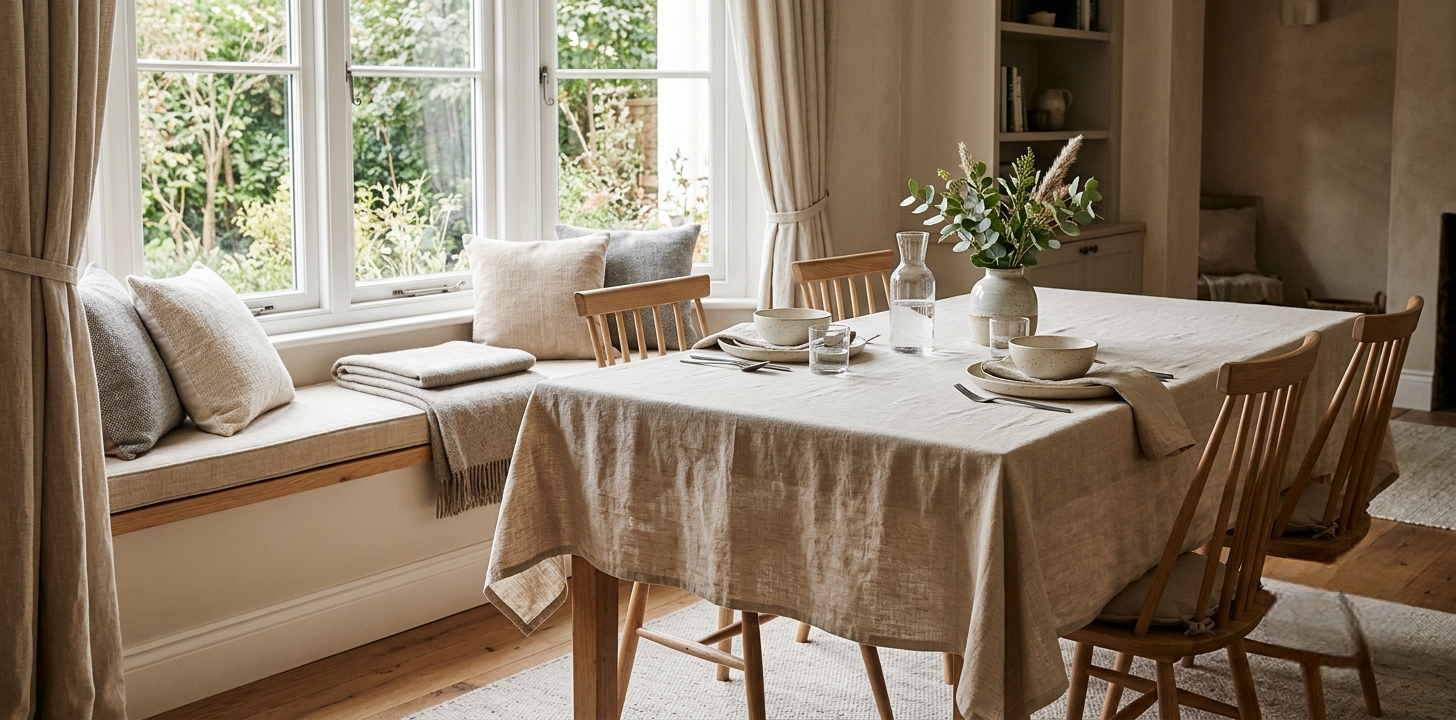
A bay window seat can turn an ordinary dining area into a comfortable and inviting corner. It brings in natural light, creates additional seating, and offers a pleasant place to enjoy breakfast, read, or spend time with family. When a dining table is positioned nearby, the window seat and table can work together to create a welcoming space.
Styling both areas requires a little attention to proportion and movement. The tablecloth should complement the window seat without making the room feel crowded or interfering with comfortable seating. With a few thoughtful choices, you can create a dining area that feels connected, practical, and visually balanced.
Start by considering how people will move between the dining table and the bay window seat. Leave enough room to pull out chairs, reach the bench, and walk around the table without brushing against furniture.
If the window seat is used as regular dining seating, check the distance between its front edge and the tabletop. A tablecloth that hangs too low may become trapped when someone sits down or moves along the seat.
Choose a moderate drop and test the arrangement with the seat in its usual position. The fabric should hang neatly without interfering with everyday movement.
Bay windows often become natural focal points because of their shape and the light they bring into the room. The table covering should support that feature rather than compete with it.
A simple Tablecloth can create a defined dining area while allowing the window, curtains, and seat cushions to remain visually important.
If the window seat already has patterned cushions, consider a solid tablecloth in a coordinating shade. When the seating is neutral, a subtle pattern on the table can introduce additional character.
The fabric you choose should suit the way the dining area is used. If the table is part of a busy family space, easy maintenance may matter more than elaborate decoration.
A cotton table cloth can add a natural texture that works well with wooden window seats, upholstered cushions, and simple dining furniture. Cotton fabrics are available in different weights and finishes, so consider the care instructions before choosing one for frequent use.
Avoid bulky trims near the edges if the window seat is close to the table. A clean finish helps prevent fabric from catching when people move into their seats.
The shape of your dining table affects how well it fits beside a bay window. Round tables can soften the angular lines of a room, while rectangular tables may make better use of a longer dining area.
For a circular table, round table cloths provide even coverage and create a gentle outline around the dining space.
A long table can be styled with a rectangle table cloth that follows its proportions. If the window seat occupies a compact corner, a square dining table may be a practical alternative.
Measure the tabletop carefully and add twice your preferred drop to both the length and width. Also consider the distance between the table and window seat before selecting the final size.
The cushions on a bay window seat offer an easy starting point for choosing tablecloth colors. You can repeat one of their shades on the table to create a visual connection between the two areas.
For example, soft green cushions can work with an ivory tablecloth, while blue upholstery may pair nicely with natural beige or muted gray. If the window seat has a floral print, a plain table covering can prevent the patterns from competing.
A black table cloth can create contrast in a bright dining area with pale cushions and light-colored walls. Balance the darker surface with simple ceramics or natural wood accessories.
A bay window already introduces distinctive architectural lines, so patterns should be chosen carefully. Too many competing prints can make a small dining corner feel busy.
If the window seat has plain upholstery, a modest checkered design can add interest to the tabletop. Square table cloths with a gingham pattern can be a suitable choice for a compact square table.
Keep curtains and cushions relatively simple when using a patterned tablecloth. Alternatively, let the window seat provide the pattern and choose a solid covering for the dining table.
Natural light is one of the most appealing features of a bay window. Avoid blocking it with oversized centerpieces or tall decorative arrangements.
A small ceramic vase, a low bowl of seasonal fruit, or a compact arrangement of greenery can add interest without interrupting the view. Choose accessories that complement the tablecloth and window seat rather than introducing several unrelated colors.
If the dining table is used for meals throughout the day, make sure the centerpiece can be moved easily to create room for serving dishes.
A bay window seat can serve several purposes throughout the day. It may be a place to enjoy morning coffee, read, or relax while someone else uses the dining table.
Keep the area comfortable with cushions that suit the room's color palette. A small basket nearby can hold books or lightweight throws without taking up valuable floor space.
Try not to overcrowd the window ledge or seat with decorations. Leaving some open space helps preserve the airy feeling that makes bay windows appealing.
A dining table near a bay window seat can create a comfortable and characterful dining area when the layout, fabric, and accessories work together. Choose a tablecloth with a suitable drop, coordinate its color with the window seat cushions, and keep the centerpiece low enough to preserve the natural light. All Cotton and Linen offers tablecloth styles that can help bring a coordinated finish to this inviting corner of the home.