English
 Arabic
 French
 Spanish
 Portuguese
 Deutsch
 Turkish
 Dutch
 Italiano
 Russian
 Romaian
 Portuguese (Brazil)
 Greek
Marine Actuator Valve Market Growth 2026: Key Trends & Demand Outlook
Other |
2026-11-09 09:19:12
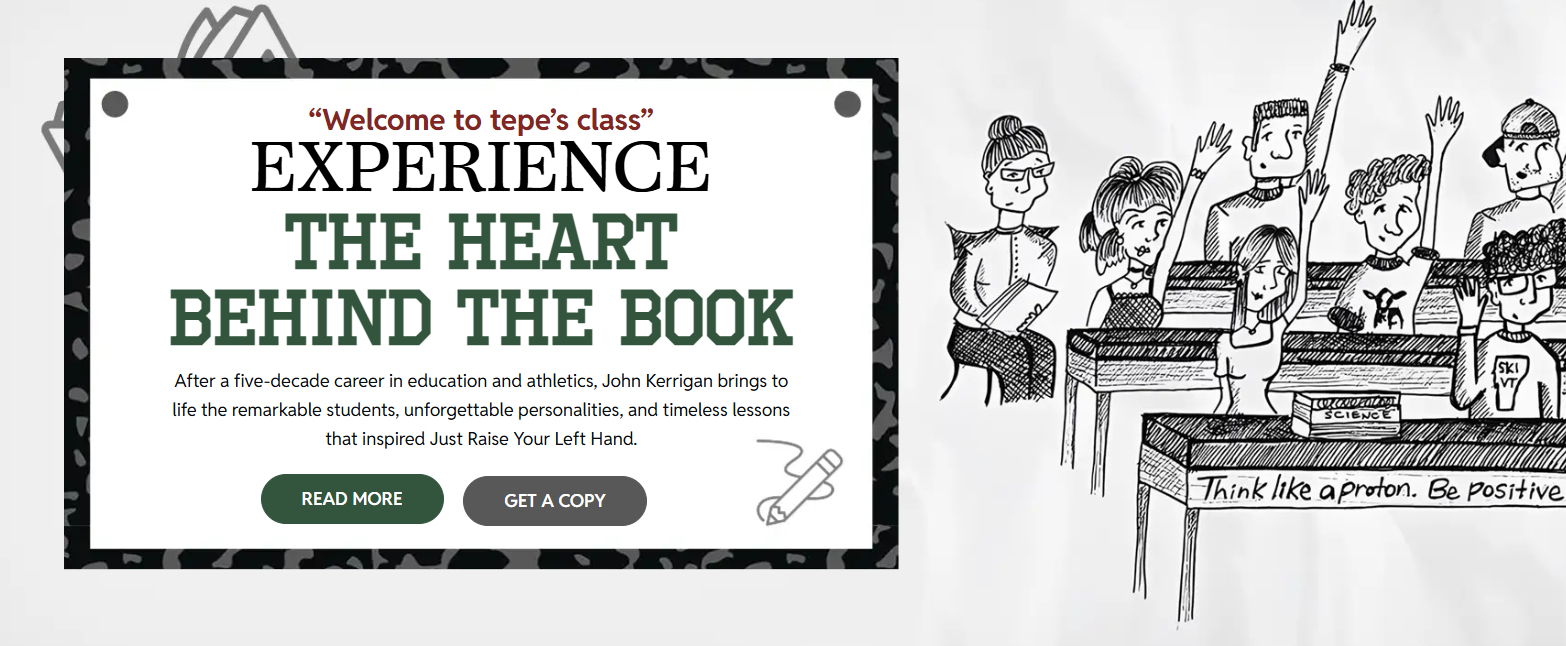
Every school has a teacher whose name comes up at reunions long after the textbooks are forgotten. That teacher is rarely remembered for a perfect lesson plan. Students remember the way he laughed at his own mistakes, the way he stood at the finish line of a cross-country race, and the way he noticed something in them before they noticed it themselves.
John Kerrigan was that kind of teacher. From 1977 to 2023, he taught science and coached cross-country, Nordic skiing, and track and field at Harwood Union High School in Vermont’s Mad River Valley. After more than five decades in classrooms and on sidelines, he has collected what he saw into a book of teaching stories that reads like a long conversation with an old friend.
Education advice usually comes in the form of studies, frameworks and policy debates. They have their place, but they rarely capture what a school day feels like from the inside. A story does that better. It shows a nervous new teacher on his first day, a student who surprises everyone at the state meet, or an administrator caught between rules and common sense.
Stories also travel well. A first-year teacher in a different state can read about a classroom disaster that happened decades ago and recognize it at once. A parent can read about a struggling athlete and see their own child. That shared recognition is what keeps stories about teaching and coaching worth telling.
Over the years, John earned wide respect in his community. He was twice selected as his school’s representative for Vermont Teacher of the Year. He was also a two-time runner-up for Vermont Biology Teacher of the Year, and he received the Golden Apple Award for his work with special-needs students. Those honors point to something he valued more than any title: the ability to see potential in people who hadn’t yet seen it in themselves.
That outlook runs through his book, Just Raise Your Left Hand: “Tell Us a Story”. The central figure is Joe Tepedino, a teacher and coach whose career brings decades of triumphs, setbacks, unforgettable personalities and life-changing lessons. Across thirteen interconnected chapters, readers follow him from a newcomer in the classroom and on the sidelines to a respected educator, coach and international referee.
The stories are set in Vermont’s Mad River Valley, a region of close-knit communities, mountain landscapes and well-known ski destinations such as Mad River Glen and Sugarbush Resort. The place is more than a backdrop. Small-town life shapes how students, parents and colleagues treat one another, and it gives the book a warmth that larger, more anonymous settings rarely offer.
Resilience is learned, not inherited. Many of the chapters circle the same idea: setbacks are part of the process. Whether it’s a lost race, a difficult class or a career shift, the lesson is how a person gets back up.
Humor makes hard topics easier. The book moves between serious and light-hearted chapters. Readers have described laughing at some stories and reflecting quietly on others, a balance that makes it easy to keep turning pages.
Teaching has changed, and the book shows how. Over four decades, schools have gone through major shifts in administration, culture and public attention. A teacher who lived through all of it offers a perspective that a policy report can’t.
Short chapters respect your time. You can read one chapter on a lunch break or finish the whole book in a weekend. That structure suits busy teachers, parents and coaches.
Retired and current teachers are the obvious audience, since many will recognize their own classroom experiences. Coaches and athletes, particularly those involved in track, cross-country or skiing, will find plenty to relate to. Parents and mentors will enjoy the reminders of how much one trusted adult can shape a young person. Anyone who loves regional memoir and warm, human storytelling will feel at home too.
Great teachers rarely announce their impact. It shows up years later, in the people they taught and the stories those people keep telling. A book like this lets a wider audience share in that impact and be reminded that classrooms and sports fields are where much of life’s real learning happens.
Every student has a story. The best teachers are the ones who make sure it isn’t forgotten.