English
 Arabic
 French
 Spanish
 Portuguese
 Deutsch
 Turkish
 Dutch
 Italiano
 Russian
 Romaian
 Portuguese (Brazil)
 Greek
How to Create a Distinctive Look with Thug Club Clothing
Shopping |
2026-11-03 14:53:46
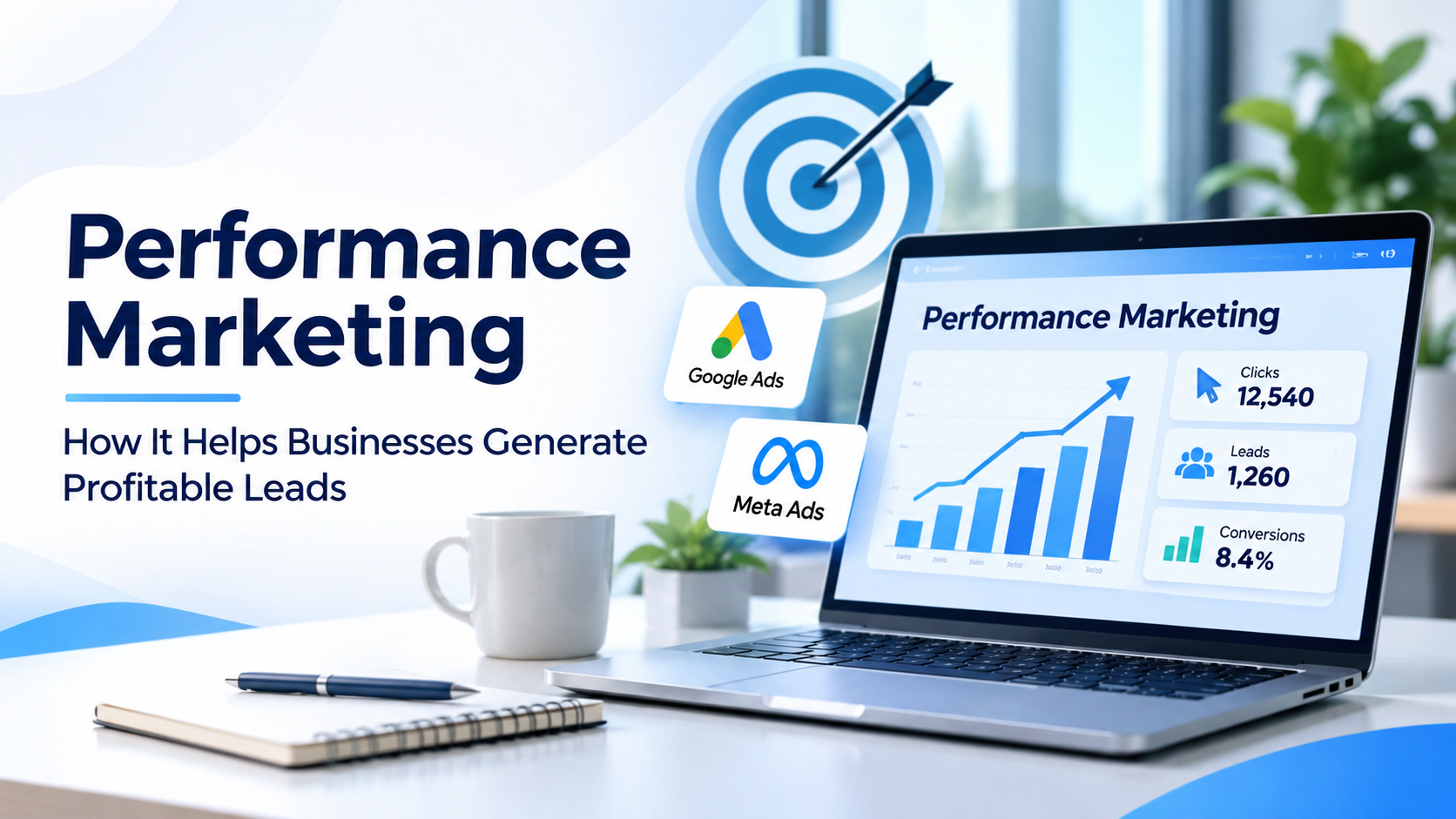
Getting traffic to a website is only one part of digital marketing. The bigger challenge is attracting people who are genuinely interested in a business's products or services and encouraging them to take action.
Many businesses invest in online advertising but struggle to understand why their campaigns generate clicks without producing enough enquiries or sales. In most cases, the problem is not simply the advertising budget. It can involve audience selection, campaign structure, landing page experience, messaging, and conversion tracking.
This is where performance marketing becomes valuable. Instead of focusing only on impressions and clicks, it connects advertising activities with measurable business outcomes.
Performance marketing is a results-oriented digital advertising approach in which campaigns are planned, monitored, and optimized using measurable performance indicators.
Businesses can use platforms such as Google Ads, Meta Ads, and other digital advertising channels to reach relevant audiences.
Unlike campaigns that focus mainly on visibility, performance-driven campaigns also evaluate actions such as enquiries, purchases, registrations, and qualified leads.
The objective is to understand which activities contribute to business growth and allocate advertising resources more effectively.
A campaign can receive thousands of clicks and still fail to generate meaningful business results.
This often happens when advertisements reach people who have little interest in the offered product or service.
Audience targeting should consider customer requirements, search behaviour, location, interests, and purchasing intent.
For example, a local service provider may benefit more from reaching customers actively searching for its services within relevant locations than from attracting a broad audience with no immediate requirement.
Better audience selection helps reduce irrelevant traffic and improve campaign relevance.
An advertisement creates the first opportunity to attract attention, but the landing page helps turn that interest into action.
If visitors click an advertisement and arrive on a confusing page, they may leave without submitting an enquiry.
An effective landing page should communicate the offer clearly, explain its benefits, provide relevant information, and include an easy-to-find call to action.
Mobile responsiveness, page speed, readable content, and simple enquiry forms also contribute to a better user experience.
Advertising and landing page optimization should therefore be treated as connected activities.
Without reliable conversion tracking, businesses may find it difficult to understand whether their advertising campaigns are generating actual results.
Tracking should be configured according to campaign objectives. Depending on the business, important actions may include form submissions, phone calls, purchases, and qualified enquiries.
Tools such as Google Analytics 4, Google Ads conversion tracking, and Meta Pixel can help businesses understand campaign activity when configured appropriately.
It is also important to distinguish between a basic enquiry and a qualified lead. Not every conversion represents a genuine sales opportunity.
Launching an advertising campaign is only the beginning of performance marketing.
Campaigns need regular evaluation to identify which audiences, advertisements, keywords, and landing pages are producing useful results.
Performance analysis may involve reviewing cost per lead, conversion rate, click-through rate, customer acquisition cost, and return on advertising spend.
Businesses can use these insights to refine targeting, test different creatives, adjust budgets, and improve landing page experiences.
Decisions should be based on sufficient data rather than making frequent changes without understanding their impact.
Even a well-targeted campaign can struggle if its advertisement fails to communicate a compelling message.
Creative strategy plays an important role in capturing attention and explaining why a product or service deserves consideration.
Businesses should experiment with different headlines, visuals, offers, and messaging approaches while maintaining consistency with their landing pages.
The strongest advertisement is not necessarily the most visually complicated one. It is the one that communicates the right message to the intended audience.
A low cost per lead may look attractive, but it does not always indicate a successful campaign.
For example, a business might receive many inexpensive enquiries that rarely convert into customers. Another campaign may generate fewer leads but attract people with stronger purchasing intent.
This is why campaign evaluation should include lead quality, sales outcomes, and customer acquisition costs.
The ultimate goal should be to generate commercially valuable opportunities rather than simply increasing conversion numbers.
Every business has different advertising requirements. An eCommerce company may prioritize purchases and revenue, while a professional service provider may focus on qualified enquiries and consultation requests.
Before launching campaigns, businesses should establish clear objectives, understand their audience, select appropriate advertising platforms, and define measurable success indicators.
A structured approach makes it easier to evaluate campaign performance and identify opportunities for improvement.
Businesses looking for professional campaign planning and optimization can explore Performance Marketing Services by Digiworld Solution.
The right strategy should connect advertising investments with realistic business goals and measurable outcomes.
Performance marketing is not simply about spending money on advertisements or generating more website traffic. It is about understanding how advertising activities contribute to meaningful business results.
By combining relevant audience targeting, effective creatives, conversion-focused landing pages, accurate tracking, and continuous optimization, businesses can make more informed advertising decisions.
A successful campaign should not only attract attention but also create genuine opportunities for business growth.