English
 Arabic
 French
 Spanish
 Portuguese
 Deutsch
 Turkish
 Dutch
 Italiano
 Russian
 Romaian
 Portuguese (Brazil)
 Greek
Experts Predict Insurtech Market Will Exceed Expectations in Coming Years
Other |
2026-10-28 09:43:26
Choosing a toy for a child is not always as simple as picking something colourful, popular or suitable for their age. Children have different personalities, interests and ways of enjoying play. One child may love building towers and solving puzzles, while another may prefer making up stories, running around outdoors or exploring different textures.
When a toy matches a child’s personality, it can feel more enjoyable and meaningful. It gives them a chance to play in a way that feels natural while also helping them discover new interests. Rather than choosing toys based only on trends or age recommendations, parents and gift-givers can make better choices by noticing what makes each child curious, excited and comfortable.
Children do not all approach play in the same way. Some are energetic and enjoy activities that involve movement. Others prefer quiet play, where they can focus on a puzzle, draw a picture or build something carefully. Some children enjoy playing with others, while others are happiest exploring an activity independently.
These differences are a normal part of childhood. A child’s personality can influence the toys they return to, the games they invent and the activities they find satisfying. Recognising these preferences can help adults choose toys that are more likely to be used and enjoyed.
It is also important not to treat personality as a fixed label. A child who usually prefers quiet activities may enjoy an outdoor game with friends, while an energetic child may become absorbed in a creative project. Toys can reflect a child’s current interests without limiting what they might enjoy in the future.
Some children are naturally curious. They like asking questions, examining objects and discovering how things work. For these children, toys that encourage exploration can be especially engaging.
Building blocks, simple science kits, puzzles, construction sets and toys with moving parts can offer opportunities to experiment. A child may enjoy finding out how pieces fit together, testing different designs or discovering what happens when they change something.
The best toys for curious children do not always need to provide an immediate answer. Activities that allow trial and error can make play more interesting because the child gets to discover things for themselves.
For younger children, simple shape sorters or stacking toys can provide an early opportunity to explore cause and effect. Older children may enjoy more detailed building sets, age-appropriate experiments or creative challenges that require planning.
Children with vivid imaginations often enjoy toys that can become part of a story. A simple object may turn into a character, a vehicle or a special item in an invented world. These children may enjoy role-play toys, dolls, toy animals, costumes, play food and miniature settings.
Imaginative toys can give children freedom to create their own stories rather than follow one fixed way of playing. A set of toy animals might become a farm one day and a jungle adventure the next. Dress-up items may inspire a pretend performance, while a play kitchen can become part of a game about running a café.
When choosing toys for imaginative children, consider whether the toy leaves room for their own ideas. A toy with many built-in sounds or actions may be entertaining, but an open-ended item can sometimes provide more opportunities for storytelling.
Some children enjoy moving, racing, jumping and spending time outdoors. They may find toys more appealing when play involves physical activity rather than sitting in one place for a long time.
Depending on the child’s age and abilities, suitable options might include balls, skipping ropes, outdoor games, ride-on toys or remote control toys. These can offer different ways to practise movement, coordination and control while having fun.
For children who enjoy vehicles, remote control toys may be particularly interesting because they combine movement with a hands-on activity. A child can practise steering, navigating around obstacles and exploring different spaces. Always check the product’s age guidance and use it in an appropriate, safe area.
Active play does not need to be competitive. Some children enjoy setting their own challenges, creating obstacle courses or seeing how far they can move a toy. The goal is to find activities that suit their energy and interests.
Not every child wants fast-paced or noisy activities. Some children enjoy spending time on a task, noticing small details or working through a challenge at their own pace.
Puzzles, drawing materials, model-building sets, matching games and simple craft activities can suit children who prefer focused play. These toys can provide a calm activity without requiring a child to compete or perform for others.
When choosing a toy for a child who likes quiet play, consider the environment as well as the toy itself. A comfortable space, enough time and a manageable level of difficulty can help them enjoy the activity.
A puzzle that is too easy may not hold their interest, while one that is far too difficult may become frustrating. Look for a level that gives the child a chance to make progress while still offering a challenge.
Some children enjoy playing with friends, siblings or family members. They may be drawn to games that involve conversation, teamwork, taking turns or sharing ideas.
Board games, card games, cooperative activities, team sports and pretend-play sets can create opportunities for social interaction. The right choice depends on the child’s age, confidence and preferred style of play.
For children who enjoy working together, cooperative games can be a useful option because players share a goal rather than compete against one another. For children who enjoy friendly competition, simple games with clear rules may be more appealing.
It is worth considering how many people are needed to play. A toy that requires several players may not be the best everyday choice if the child often plays alone. A flexible toy that works both independently and with others may offer more lasting value.
Children may have different preferences for sound, texture, movement and visual detail. Some enjoy toys with soft or textured surfaces, while others prefer smooth materials or activities with less sensory input.
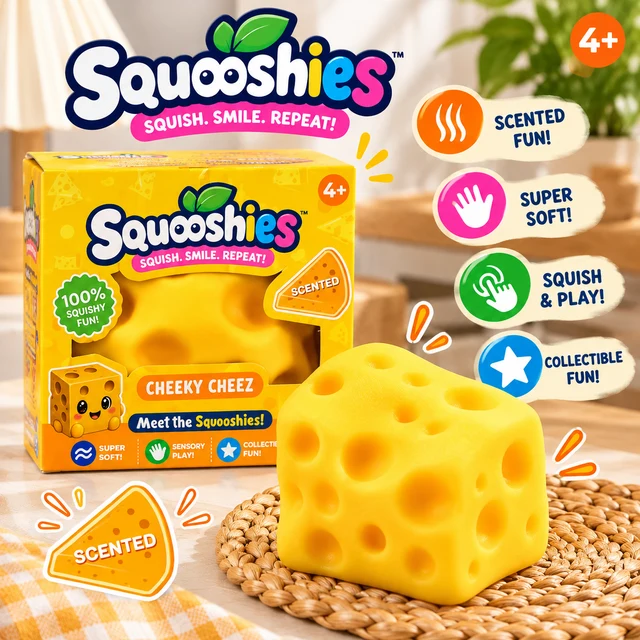
Tactile toys, such as soft play items and squishy toys, may appeal to children who enjoy exploring different textures. Other children may prefer toys that involve sound, movement or visual patterns. These preferences can change, so it is helpful to observe how a child responds rather than assume that one type of toy will suit everyone.
If a child seems uncomfortable with a toy’s noise, texture or flashing lights, consider a simpler alternative. A toy should invite enjoyable play, not create unnecessary discomfort. Experiences vary from child to child, and sensory toys should not be treated as a guaranteed solution for emotional or behavioural difficulties.
Families looking for tactile play options can explore the https://gifzy.co.uk/collections/squeeze-squishy-toys. Check each product’s age guidance and safety details before choosing it for a child.
Personality can be a helpful guide, but it should not become a strict rule. Describing a child as “shy”, “creative” or “active” does not mean they will only enjoy one type of toy.
A child who prefers independent play may gradually become interested in group games. A child who enjoys movement may discover a love of drawing or building. Offering a variety of suitable activities gives children room to explore different sides of themselves.
Instead of asking only, “What kind of child are they?”, consider questions such as: What activities do they return to? What makes them curious? Do they like making things, moving, pretending, solving problems or playing with others? These observations can provide a more useful starting point than a personality label.
Before buying a toy, think about how the child is likely to use it. Consider their current interests, age, abilities and the space available for play. A large outdoor toy may be unsuitable for a small home, while a detailed craft kit may need adult help or a dedicated place to use it.
Safety should remain a priority. Read the age recommendation, check for small parts and follow the manufacturer’s instructions. For younger children, avoid toys with components that could present a choking risk. For older children, make sure the toy’s complexity and equipment are appropriate for their experience.
It can also help to choose toys that offer more than one way to play. A set of blocks, for example, can support building, storytelling and problem-solving. A simple game can be enjoyed alone or with family members. Toys with flexible uses may stay interesting as a child’s preferences develop.
When practical, involving children in choosing a toy can help make the purchase more successful. Younger children may respond well to being offered two or three suitable options, while older children can explain what interests them about a particular activity.
This does not mean children need to choose every toy themselves. Adults still need to consider safety, quality, age guidance and budget. However, listening to a child’s preferences can help avoid buying something that looks appealing to an adult but does not match the child’s interests.
Gift-givers can also learn from parents or caregivers. Asking what the child currently enjoys may be more helpful than relying on a popular toy list. A thoughtful gift does not have to be unusual or expensive; it simply needs to show that the child’s interests have been considered.
Choosing toys that match a child’s personality can make play more enjoyable because it reflects the way they like to explore, create, move and connect with others. Curious children may enjoy toys that invite discovery, imaginative children may prefer open-ended play, and active children may look for opportunities to move. Children who enjoy quiet or social activities may be drawn to puzzles, creative materials or games they can share.
The aim is not to place children into fixed categories. It is to notice what interests them while giving them room to try something new. By combining a child’s preferences with age guidance, safety and variety, adults can choose toys that feel personal and provide plenty of opportunities for enjoyable play.
For more toy ideas, visit https://gifzy.co.uk/ and explore options that suit different interests and styles of play.