English
 Arabic
 French
 Spanish
 Portuguese
 Deutsch
 Turkish
 Dutch
 Italiano
 Russian
 Romaian
 Portuguese (Brazil)
 Greek
Diamond Cut Alloy Wheels Lincolnshire for Expert Wheel Restoration
Other |
2026-10-30 07:07:56
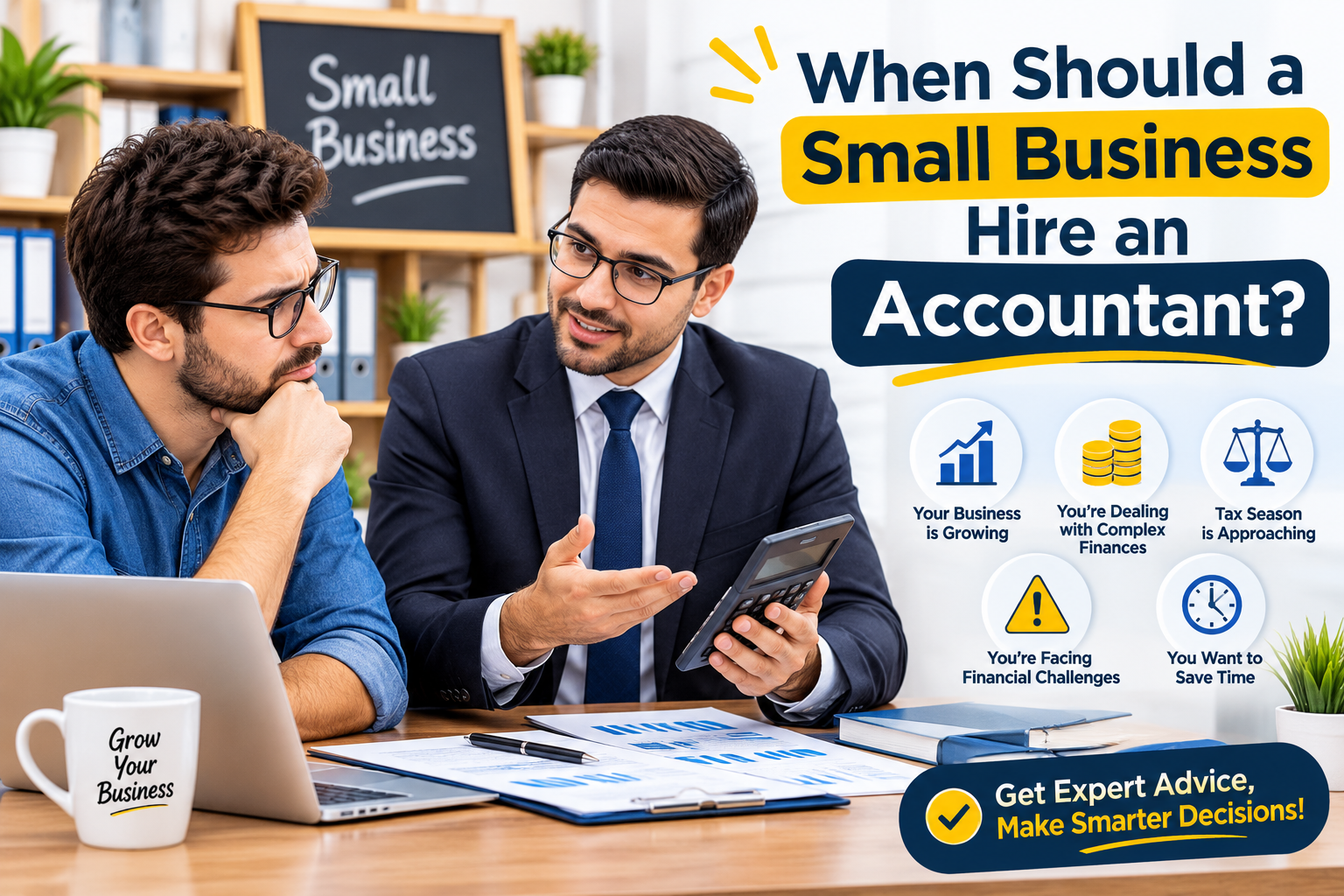
Most small business owners start out doing their own books. It keeps costs down, and in the early days the numbers are simple. As the business grows, though, tax deadlines multiply, records become more complex and mistakes become more expensive.
So when does a small business need an accountant? There is no single trigger, but there are clear signs that professional support would save you time, money and stress.
If bookkeeping is eating into evenings and weekends, that time has a cost. Hours spent reconciling bank statements are hours not spent winning customers or delivering work.
You must register for VAT once your taxable turnover passes £90,000 in any rolling 12-month period. An accountant can monitor your turnover, advise on the right VAT scheme and file your returns under Making Tax Digital.
Employing people brings payroll, PAYE reporting to HMRC in real time and workplace pension duties. Getting payroll wrong affects your staff as well as your compliance.
A limited company must file annual accounts with Companies House, submit a Corporation Tax return and keep statutory records. Directors also need to think about the most tax-efficient mix of salary and dividends.
Sole traders and landlords with qualifying income above the threshold now need digital records and quarterly updates to HMRC. If that sounds daunting, an accountant can set up the software and handle the submissions.
If you are regularly surprised by tax bills or unsure how much you can safely draw from the business, you need clearer financial information, not just a tidier spreadsheet.
Applying for finance, taking on premises or bringing in investors all require reliable figures. An accountant can prepare forecasts and help you present your business with confidence.
The best time is often before you start trading. Early advice can help you choose the right business structure, register correctly with HMRC and set up bookkeeping that will grow with you.
A sole trader with straightforward income may manage their own Self Assessment return at first. However, once you have several income streams, rental income, staff or plans to incorporate, professional advice usually pays for itself in time saved and costly errors avoided.
A good small business accountant does more than complete tax returns. The main benefits include:
Accurate bookkeeping is the foundation of everything else. Many accountancy firms offer bookkeeping services, keeping your records up to date throughout the year rather than rushing to reconstruct them at year end.
Payroll services cover calculating pay, submitting Real Time Information to HMRC, producing payslips and managing auto-enrolment pensions. Outsourcing payroll removes a monthly administrative burden and reduces the risk of errors.
An accountant can prepare your Self Assessment tax return, VAT returns, Corporation Tax return and annual accounts, making sure each one is filed on time and consistent with the others.
Cloud accounting software such as Xero links to your bank account, automates routine bookkeeping and lets you and your accountant work from the same live figures. Xero accountants can set up the software, train your team and use the data to give timely advice.
As a business grows, financial decisions carry more weight. Should you hire another member of staff? Can you afford new equipment? Is it time to become a limited company?
Professional accounting services give you the forecasts, cash flow management and tax planning to answer those questions with confidence, rather than relying on guesswork.
| Managing your own accounts | Hiring an accountant | |
|---|---|---|
| Cost | No professional fees | Fees, often offset by time saved and tax planning |
| Time | Your own time, often outside working hours | Frees you to run the business |
| Accuracy | Depends on your knowledge | Qualified, up-to-date expertise |
| Tax planning | Limited | Proactive advice throughout the year |
| Best for | Very simple, low-turnover businesses | Growing businesses, employers and limited companies |
Many businesses use a mix of both, keeping day-to-day records themselves in Xero and using an accountant for tax returns, year-end accounts and advice.
When comparing accountancy services in Milton Keynes, look for:
Meeting a local accountant in person can also make it easier to build a working relationship and discuss your plans in detail.
Typically when admin starts taking too much time, when you approach the VAT threshold, take on staff, incorporate or plan for growth. Many businesses benefit from advice before they start trading, so their structure and records are right from day one.
There is no legal requirement to use an accountant. However, limited companies, employers and VAT-registered businesses have complex obligations, and professional support can reduce the risk of errors and HMRC penalties.
Fees depend on your business structure, turnover, transaction volume and the services you need. Many firms offer fixed monthly packages, so ask for a clear quote that lists everything included. Avoid comparing on headline price alone.
Yes. Many owners keep their own records using software such as Xero and ask an accountant to review them and prepare year-end accounts and tax returns. This works well if you are organised and your finances are straightforward.
Services usually include bookkeeping, payroll, VAT returns, Self Assessment and Corporation Tax returns, annual accounts, tax planning, cash flow forecasting and business advice. The right mix depends on your structure and how much support you want.
Not necessarily, but VAT returns must be submitted through Making Tax Digital compatible software. An accountant can make sure you use the right scheme and that returns are accurate and on time.
Often, yes. Early advice on business structure, registration and bookkeeping can prevent costly mistakes and set up good financial habits from the start. It also means someone can answer questions as they arise in your first year.
Yes. Many accountants run payroll for their clients and are experienced Xero users who can set up the software, connect bank feeds and manage payroll within it, often as part of one monthly package.
A bookkeeper records day-to-day transactions and keeps your records up to date. An accountant uses those records to prepare accounts and tax returns, and to provide tax planning and financial advice.
Check their professional body membership, experience with businesses like yours, pricing, software expertise and range of services. A short initial conversation will show whether they understand your business and communicate clearly.
If you are spending too long on admin, facing new tax obligations or planning to grow, it is probably time to bring in professional support. The right accountant will keep you compliant, help you keep more of what you earn and give you the financial clarity to make better decisions.
If you are looking for an accountant in Milton Keynes, speak to our team about bookkeeping, payroll, tax returns and Xero support tailored to your business.