English
 Arabic
 French
 Spanish
 Portuguese
 Deutsch
 Turkish
 Dutch
 Italiano
 Russian
 Romaian
 Portuguese (Brazil)
 Greek
How Does Patient Bed Price in Pakistan Influence Better Care Choices?
Other |
2026-10-21 10:59:04
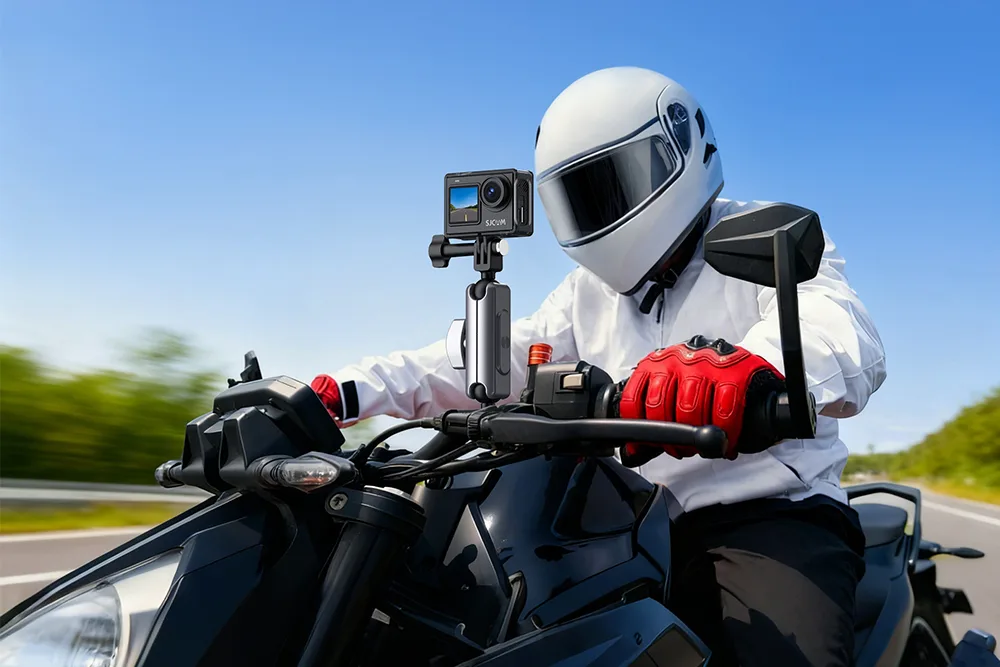
For motorcycle riders, choosing an action camera is more than a matter of brand loyalty. The right device must survive constant vibration, sudden weather changes, lean angles, and long days on the road while delivering footage that is actually watchable. Two names dominate the conversation when riders discuss action cameras for motorcycle riders: GoPro and DJI. Both produce capable, rugged cameras, yet they approach the problem differently. Understanding those differences helps you match a camera to the way you ride rather than buying based on reputation alone.
This comparison focuses on the practical realities of motorcycle use in 2026, looking at the current leading models from each brand—primarily the GoPro HERO13 Black (still widely used and supported) alongside the newer MISSION 1 series and DJI’s Osmo Action 5 Pro and especially the Osmo Action 6.
Motorcycle riding constantly changes light conditions. You move from bright open roads into tree cover, tunnels, or dusk within minutes. Sensor size and processing matter more here than headline resolution numbers.
GoPro’s HERO13 Black uses a 1/1.9-inch sensor and delivers strong 5.3K60 video with good dynamic range in daylight. Its HyperSmooth stabilization and color science produce clean, vibrant footage that many riders find appealing straight out of the camera. However, the smaller sensor shows its limits in low light and high-contrast transitions—tunnels and evening rides often look noisier.
DJI has pushed larger sensors in recent models. The Osmo Action 5 Pro’s 1/1.3-inch sensor already improved low-light performance noticeably. The Osmo Action 6 goes further with a 1/1.1-inch sensor and a variable aperture (f/2.0–f/4.0). This combination handles mixed lighting and darker conditions more cleanly, with better shadow recovery and less noise. For riders who frequently ride at dawn, dusk, or through shaded mountain roads, DJI currently holds a clear advantage in usable image quality under challenging light.
GoPro’s newer MISSION 1 Pro, with its 1-inch sensor, closes or surpasses the gap in pure image quality and offers higher-end options such as 8K and extreme slow motion. It is, however, larger and heavier, making it less ideal as a pure helmet-mounted everyday camera for many riders.
Engine vibration and lean angles are the biggest enemies of motorcycle footage. Both brands offer advanced electronic stabilization with horizon correction, but the character of the results differs.
GoPro’s HyperSmooth system has long been praised for handling high-frequency motorcycle vibration exceptionally well. Many riders still consider it the benchmark for keeping handlebar or helmet footage smooth on rough roads. Horizon lock keeps the frame level through corners.
DJI’s RockSteady and HorizonSteady systems (improved in the Action 6) deliver excellent results as well, with strong 360-degree horizon correction available in more modes and resolutions than earlier versions. Some testers note that GoPro still edges out on pure vibration absorption in extreme cases, while DJI often produces a more naturally level horizon with less aggressive cropping in certain situations. In real-world motorcycle testing, both are more than capable; the difference is often preference rather than a clear winner.
Battery life separates convenient cameras from frustrating ones on multi-hour rides.
GoPro HERO13 Black typically delivers roughly 90–150 minutes of 4K recording depending on settings, temperature, and whether screens and Wi-Fi are active. Spare batteries are part of the normal workflow for longer days. The MISSION 1 series improves runtime significantly (claimed 3+ hours at 4K30 in some conditions).
DJI has made battery endurance a major focus. Both the Action 5 Pro and Action 6 claim up to four hours in lower resolutions or optimized settings, with real-world 4K performance still notably longer than most GoPro HERO models. The Action 6 also benefits from better cold-weather performance (rated to –20 °C). For touring riders or those who dislike frequent battery swaps, DJI currently offers a clear practical advantage.
Both brands build tough cameras. GoPro HERO13 Black is waterproof to 10 meters without a case. DJI Osmo Action 5 Pro and Action 6 reach 20 meters without a housing—an advantage in heavy rain or accidental deeper immersion. Both handle the knocks and vibration of motorcycle mounting well when properly secured with a tether.
Operating temperature ranges favor DJI slightly for extreme cold, which matters for early-season or high-altitude rides.
This is where GoPro has historically dominated. The brand’s mounting system is the industry standard. Helmet chin mounts, adhesive bases, handlebar clamps, and third-party options are abundant and mature. If you already own GoPro mounts or prefer maximum compatibility, staying in the GoPro ecosystem is convenient.
DJI has improved its magnetic quick-release system and offers solid motorcycle-friendly mounts, but the overall accessory universe is smaller. Cross-compatibility exists with adapters, yet pure convenience still leans toward GoPro for riders who frequently reconfigure setups.
Wind noise is a constant challenge. Both brands improve onboard microphones and offer wind reduction. DJI’s direct connection to its own wireless microphones (without a separate receiver on recent models) is particularly convenient for riders who want cleaner voice audio. GoPro supports external mics and has strong intercom integration options with certain systems, plus built-in GPS on the HERO13 for speed, altitude, and route overlays—something many data-oriented riders value highly.
Dual screens on recent DJI models make framing easier when the camera is already mounted. GoPro’s interface is refined and familiar to long-time users. Voice control and quick-start features exist on both.
The GoPro HERO13 Black typically sits around the mid-to-upper range of mainstream action cameras. The MISSION 1 Pro commands a premium for its larger sensor and higher-end capabilities. DJI’s Osmo Action 5 Pro often undercuts the HERO13 while delivering strong battery life and low-light performance. The Action 6 positions itself as a high-value flagship alternative, frequently praised for offering more practical features per dollar for everyday motorcycle use.
Choose GoPro (especially HERO13 Black) if you prioritize the largest mounting ecosystem, want GPS data overlays, already own GoPro accessories, or value the brand’s refined stabilization for high-vibration environments. The MISSION 1 Pro suits riders who want maximum image quality and are willing to accept more size, weight, and cost.
Choose DJI (particularly the Osmo Action 6, or the Action 5 Pro for value) if longer battery life, stronger low-light performance, deeper native waterproofing, dual screens, and built-in storage matter more to your riding. Many recent motorcycle-focused comparisons rate the Action 6 as the stronger overall daily driver for most riders.
There is no universal winner among action cameras for motorcycle riders. GoPro remains the safe, ecosystem-rich choice with excellent daylight performance and vibration handling. DJI has closed the gap aggressively and, in several practical categories that matter on real rides—battery endurance, low light, waterproofing, and modern convenience features—often leads in 2026.
The best approach is to match the camera to your specific needs: how long your typical rides last, how often you ride in changing or low light, whether you value data overlays or maximum accessory flexibility, and how much weight and bulk you are willing to put on a helmet. Test real mounted footage from both brands when possible, and factor in the total cost of mounts and spare batteries.
Both GoPro and DJI produce capable tools that can capture the freedom of the open road. Choosing between them comes down to which set of strengths aligns best with the way you ride.