English
 Arabic
 French
 Spanish
 Portuguese
 Deutsch
 Turkish
 Dutch
 Italiano
 Russian
 Romaian
 Portuguese (Brazil)
 Greek
Why Your Website Copy Sounds Fake (and the Simple Fix Most Businesses Miss)
Other |
2026-10-20 05:30:47
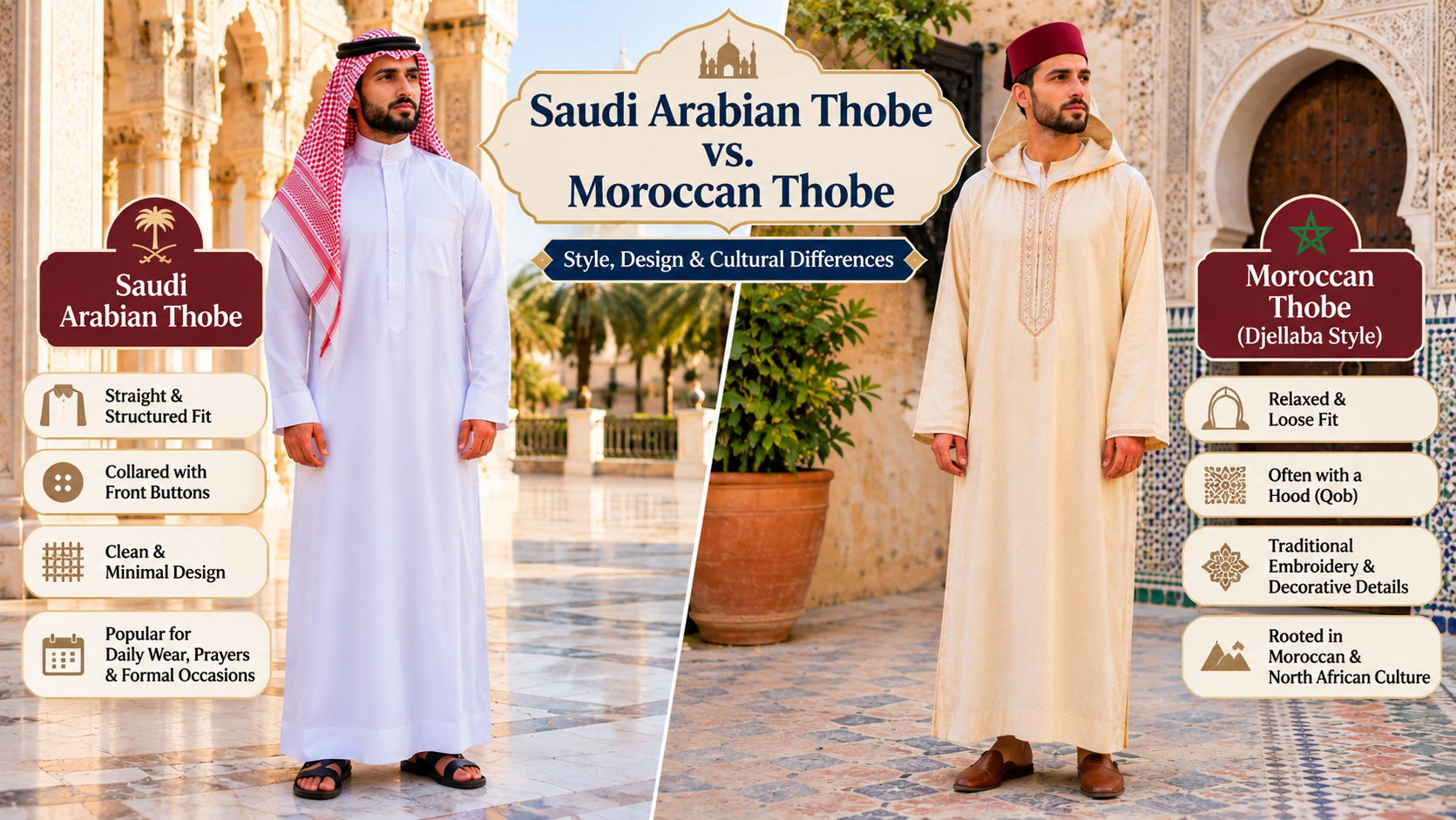
Traditional men's clothing tells a story about the culture, climate, and lifestyle of the people who wear it. This is particularly true when comparing clothing from Saudi Arabia and Morocco. Both countries have rich traditions of modest men's fashion, but their garments have developed in different ways, resulting in distinctive styles, fabrics, and designs.
The Saudi Arabian thobe is widely recognised for its clean appearance, straight silhouette, and simple finishing. Moroccan traditional clothing, on the other hand, is known for its decorative details, relaxed designs, and distinctive craftsmanship. Although both styles offer comfortable and modest clothing, they are not identical.
If you are exploring a Saudi Arabian thobe or looking for a Moroccan thobe, understanding their cultural backgrounds and design differences can help you decide which style suits your preferences.
Saudi Arabia and Morocco are both Muslim-majority countries, but their clothing traditions reflect different regional histories and influences.
In Saudi Arabia, the traditional thobe developed as a practical garment suited to the Arabian Peninsula's hot and dry climate. Its long, loose-fitting design provides coverage while allowing comfortable movement. Over time, it became an important part of everyday men's clothing and is commonly worn for work, prayers, social gatherings, and formal occasions.
Morocco has a different clothing history influenced by Amazigh, Arab, Andalusian, and wider North African traditions. Traditional Moroccan men's clothing includes garments such as the djellaba, gandora, and jabador. These styles often feature distinctive cuts, decorative stitching, and regional textile details.
Understanding these origins is important because a Moroccan djellaba and a Saudi thobe are separate traditional garments, even though both are sometimes grouped under broader searches for men's Islamic clothing.
The Saudi Arabian thobe is one of the most recognisable garments in Middle Eastern men's fashion. It is generally designed as a long, full-length garment with a straight silhouette and a relatively simple appearance.
Traditional Saudi thobes commonly feature a structured collar, buttoned front, and neatly finished cuffs. The overall design is usually understated, with attention given to the fit, fabric, and finishing rather than heavy decoration.
White is particularly popular, especially during warmer months, because it reflects sunlight and creates a clean traditional appearance. However, men also wear black, beige, grey, navy, and other colours depending on personal preference, season, and occasion.
One of the main reasons the Saudi thobe remains popular is its versatility. It can be worn for everyday activities, Friday prayers, Ramadan, Eid, business settings, and family gatherings. Its simple design also makes it easy to coordinate with traditional headwear such as a ghutra or a kufi.
For men who prefer modest clothing with a neat and refined appearance, the Saudi style offers a practical option that combines traditional design with everyday comfort.
The term Moroccan thobe is sometimes used by online shoppers to describe traditional Moroccan long garments. However, Morocco has several distinct men's clothing styles, and the djellaba is among the best known.
A traditional Moroccan djellaba is a long, loose-fitting outer garment that commonly features a hood, known as a qob. It can be worn over other clothing and is designed to provide coverage and comfort. Depending on the season and design, it may be made from lighter or heavier materials.
Moroccan garments are often recognised for their decorative details. Embroidery, patterned fabrics, carefully finished necklines, and traditional tailoring can give them a distinctive appearance. Some designs are simple enough for everyday use, while others are more elaborate for celebrations and special occasions.
Another traditional Moroccan garment is the gandora, which is generally lighter and may be worn without the hood associated with a djellaba. The jabador is another popular option, often consisting of a coordinated tunic and trousers.
These garments demonstrate the variety within Moroccan men's clothing. Rather than having one standard design, Moroccan traditional fashion includes several styles that reflect different uses and preferences.
The biggest difference between these styles is their construction and traditional appearance. A Saudi thobe is generally a single, full-length garment with a clean silhouette, while Moroccan clothing includes several garment types with different shapes and details.
A Saudi-style thobe commonly has a structured collar or defined neckline, a front opening, and a relatively minimal design. Moroccan djellabas are often recognised by their relaxed silhouette and hood, while other Moroccan garments may feature embroidery and more decorative finishing.
The way these garments are worn also differs. A Saudi thobe is commonly worn as the main outer garment, whereas a Moroccan djellaba is traditionally worn over other clothing. Moroccan gandoras and jabadors have their own styling arrangements.
| Feature | Saudi Arabian Thobe | Traditional Moroccan Clothing |
|---|---|---|
| Cultural origin | Arabian Peninsula | Morocco and North Africa |
| Common garment | Thobe or thawb | Djellaba, gandora, jabador |
| Overall appearance | Clean and structured | Relaxed and often decorative |
| Neckline | Often structured or collared | Varies by garment |
| Hood | Generally absent | Common on traditional djellabas |
| Decoration | Usually minimal | May include embroidery and traditional detailing |
| Colours | White is popular, along with darker shades | Earthy shades, neutrals, white, and other colours |
| Common use | Daily wear, prayers, work, and occasions | Daily wear, social gatherings, and celebrations |
These are general characteristics rather than strict rules. Modern designers often introduce variations, and individual garments may differ from traditional examples.
Fabric plays an important role in how comfortable traditional clothing feels. The right choice depends on the weather, intended use, and personal preference.
Saudi-style thobes are available in different materials, with lightweight fabrics commonly preferred for warmer conditions. The fabric should allow comfortable movement and fall neatly without feeling restrictive.
Moroccan garments also vary considerably in material. Lightweight fabrics can be suitable for warmer weather, while heavier materials are often used for cooler conditions. Traditional djellabas, in particular, may be made in different weights depending on the season.
Neither style is automatically more comfortable than the other. A well-fitting garment made from suitable material can be comfortable regardless of its regional origin.
When purchasing either a Saudi Arabian thobe or a Moroccan thobe, consider the fabric description, garment measurements, care instructions, and the climate in which you plan to wear it.
Both styles can be worn for different occasions, but their appearance may influence which one you choose.
A Saudi thobe is a popular option for daily activities, Friday prayers, Ramadan, and Eid. Its simple design makes it suitable for men who prefer traditional clothing that can be worn in different settings without requiring much styling.
Moroccan garments offer a different appearance. A simple djellaba can work well for everyday use and social visits, while more detailed designs may be chosen for family gatherings and cultural celebrations. A gandora or jabador can also provide an alternative for occasions where a coordinated traditional outfit is preferred.
The choice ultimately depends on your personal style and the type of garment you feel comfortable wearing.
Choosing between these traditional styles does not have to be complicated. Start by considering the appearance you prefer and how you plan to use the garment.
If you like clean lines, a structured neckline, and a simple full-length design, a Saudi-style thobe may suit your wardrobe. If you prefer a more relaxed silhouette, traditional embroidery, or a hooded design, Moroccan clothing may be worth exploring.
Colour and fabric are equally important. White and neutral shades offer a classic appearance, while darker colours can create a different look. Pay attention to garment measurements and choose a fit that allows comfortable movement.
If you are shopping online, examine product photographs and descriptions carefully. Check whether the item is a traditional thobe, djellaba, gandora, or another style rather than relying only on the product title.
Traditional men's clothing continues to be popular because it combines cultural identity with practical everyday dressing. Whether you prefer the clean appearance of a Saudi-inspired design or want to explore other traditional styles, choosing the right garment comes down to comfort, fit, and personal preference.
At Shannoh, you can explore men's thobe styles in different colours and designs for everyday wear, Friday prayers, Ramadan, and Eid celebrations. If you prefer a classic Middle Eastern appearance, you can explore the available options and find a style that complements your wardrobe.
Visit Shannoh to discover its men's Islamic clothing collection and explore traditional styles for different occasions.
The Saudi Arabian thobe and Moroccan traditional garments represent two different approaches to men's clothing. The Saudi thobe is known for its clean silhouette and simple finishing, while Moroccan clothing offers a wider variety of traditional garments, including the hooded djellaba, gandora, and jabador.
Although both traditions value modesty and comfort, their designs reflect different cultural histories and regional preferences.
Whether you prefer a classic Saudi Arabian thobe or are interested in exploring a traditional Moroccan thobe, understanding these differences can help you make a more informed choice. The best style is ultimately the one that suits your comfort, lifestyle, and personal taste.