English
 Arabic
 French
 Spanish
 Portuguese
 Deutsch
 Turkish
 Dutch
 Italiano
 Russian
 Romaian
 Portuguese (Brazil)
 Greek
Agriculture Software Development Services: Transforming Modern Farming with Technology
Other |
2026-11-23 09:52:51
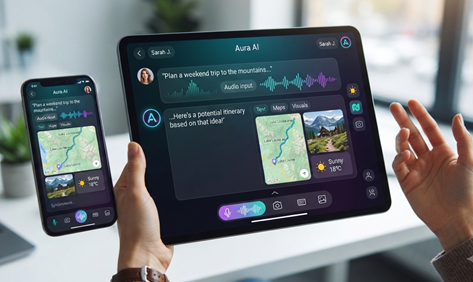
The Multimodal Ui Market CAGR signals a market expanding at a pace that underscores the growing recognition of intuitive interfaces as essential infrastructure for competitive digital engagement. This growth trajectory reflects not merely incremental technology spending but a structural shift in how organizations approach user experience, driven by rising expectations, AI integration, and the proliferation of connected devices. The compound annual growth rate observed across the market indicates sustained demand driven by voice recognition adoption, gesture control advancement, and the imperative for accessible, personalized interactions. As technological barriers diminish and AI capabilities expand, the market's expansion is expected to continue, positioning multimodal UI as foundational for the modern digital economy.
Voice Recognition as the Primary Growth Engine
The integration of voice recognition technology represents the most significant growth driver for the multimodal UI market. Consumers increasingly seek hands-free interaction, driving demand for voice-enabled interfaces across smart speakers, smartphones, automotive systems, and customer service applications. Advances in natural language processing and machine learning have enhanced the accuracy and responsiveness of voice commands, making them viable for complex tasks beyond simple queries. Businesses are investing in multimodal systems that seamlessly incorporate voice alongside touch and gesture, recognizing that voice provides accessibility and convenience that other modalities cannot match. The growth trajectory in this segment reflects both the maturation of voice technology and the recognition that hands-free interaction is essential for many use cases.
IoT Expansion and the Connected Device Imperative
The expansion of Internet of Things devices represents another significant growth accelerant, as the proliferation of connected devices creates demand for interfaces that can manage multiple input methods across diverse contexts. Smart homes, connected vehicles, wearables, and industrial IoT systems all require intuitive interfaces that accommodate voice, touch, and gesture depending on the situation. The growth in multimodal adoption reflects both the expansion of connected device ecosystems and the recognition that single-modality interfaces cannot adequately serve users across diverse environments. As IoT devices become more prevalent, the demand for cohesive multimodal systems is expected to grow correspondingly.
Personalization and the Engagement Imperative
The growing demand for personalized user experiences represents a fundamental driver of market growth, as consumers expect interfaces that adapt to their preferences, behaviors, and contexts. Multimodal systems can leverage data from multiple input channels to understand individual needs and deliver tailored responses—adjusting content, simplifying navigation, or anticipating requests. The growth trajectory in personalization-driven adoption reflects both the maturation of AI and machine learning capabilities and the recognition that personalization drives engagement and loyalty. As analytics capabilities expand, the demand for multimodal interfaces that can deliver personalized experiences is expected to grow.
Regional Growth Dynamics and the Global Adoption Curve
The compound annual growth rate varies across regions, shaped by technology infrastructure, user expectations, and regulatory environments. North America maintains significant market share supported by advanced technology companies and early adoption of emerging modalities. Europe exhibits strong growth driven by accessibility regulations and digital transformation. Asia-Pacific represents the fastest-growing region, as smartphone penetration and IoT adoption create substantial demand. The consistent thread across geographies is the recognition that multimodal UI enables rather than constrains digital engagement, positioning the market for continued expansion as organizations worldwide prioritize intuitive interaction.
➤ Featured Insights from Market Research Future: