English
 Arabic
 French
 Spanish
 Portuguese
 Deutsch
 Turkish
 Dutch
 Italiano
 Russian
 Romaian
 Portuguese (Brazil)
 Greek
KVM Market Trends Toward Virtualization and Cloud Integration
Networking |
2026-11-18 06:11:33
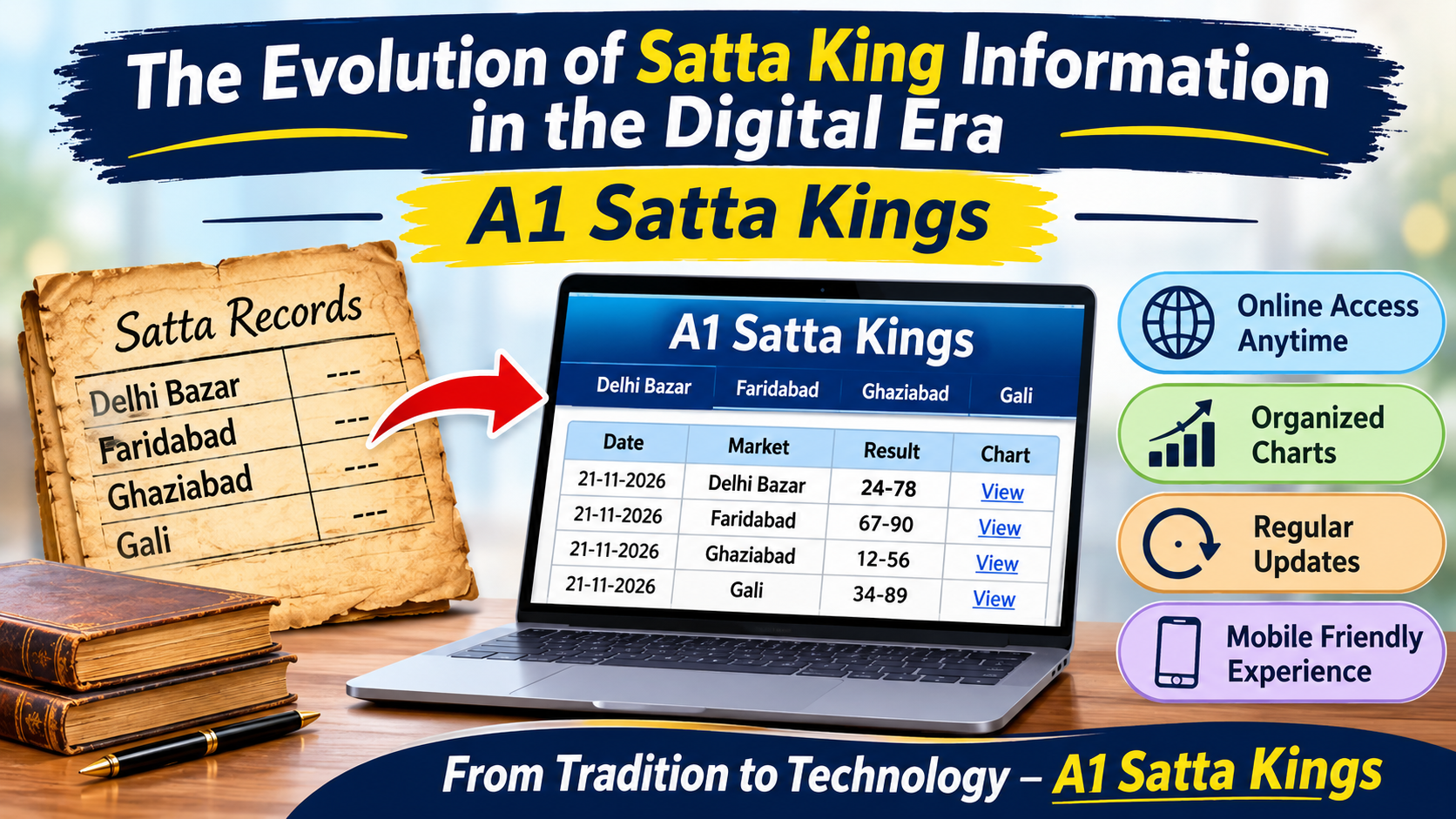
The way people access information has changed significantly with the development of digital technology. Traditional sources of information have gradually moved toward websites and online platforms, allowing readers to explore different topics through computers and smartphones. Satta King-related information has also become part of this digital transformation, with websites presenting market names, result updates, and related reference material in organized formats.
Earlier, information about regional markets was commonly shared through local sources and printed materials. Finding specific details could require checking multiple sources. Digital platforms have introduced a more convenient way to present this information through dedicated pages, categorized sections, and regularly maintained website content.
A1 Satta Kings is associated with online Satta market information, including categories such as Delhi Bazar, Faridabad, Ghaziabad, and Gali. Understanding how this information has evolved provides useful background for readers interested in regional market terminology and digital information systems.
Before widespread internet access, information was generally communicated through traditional channels. Printed lists, local publications, and word-of-mouth communication were among the methods used to share market-related details.
These methods had certain limitations. Information could be difficult to locate, and older records were not always available in one place. Readers often needed to depend on multiple sources to understand different market categories.
The development of websites changed this approach. Online platforms made it possible to present information through dedicated pages that visitors could access whenever an internet connection was available.
This transition also introduced better opportunities for organizing information according to market names, dates, and categories.
Regional identity remains an important feature of Satta-related information. Different market names are used to distinguish individual categories and their associated updates.
Some commonly recognized names include:
Delhi Bazar
Faridabad
Ghaziabad
Gali
These categories help distinguish one market section from another. Instead of presenting everything under a single heading, websites can arrange information into separate sections.
This type of classification is useful because readers can identify the category they want to explore without navigating through unrelated information.
Regional naming conventions also reflect the historical development of market-related terminology in different areas.
Website navigation plays an important role in how visitors interact with online information. A complicated website can make even simple details difficult to locate.
Modern websites generally use menus, headings, internal links, and categorized pages to improve navigation.
An organized website structure may include:
Main Navigation: Provides access to important website sections.
Market Categories: Separates information according to individual market names.
Information Pages: Explains terminology and general market-related concepts.
Update Sections: Displays recently published information.
Reference Pages: Helps readers understand previously published material.
For platforms such as A1 Satta Kings, clear navigation and market-based organization help visitors explore different information categories through a straightforward browsing experience.
Smartphones have become an important part of everyday internet usage. Many people prefer accessing websites through mobile devices rather than desktop computers.
This development has made responsive website design increasingly important.
A mobile-friendly information platform should provide:
Readable text and headings.
Properly arranged tables.
Simple navigation menus.
Fast-loading pages.
Suitable spacing between website elements.
Layouts that adjust to different screen sizes.
These features improve the reading experience and make it easier to access information while using different devices.
A website that works properly on both mobile and desktop screens can serve a wider range of visitors.
The presentation of information can influence how easily visitors understand a website.
When headings are unclear or information is displayed without proper organization, readers may struggle to identify the details they need.
Clear presentation involves using understandable language, consistent terminology, and logical page structures.
For example, a website covering multiple regional markets should identify each category clearly. Similarly, general information should be separated from result-related updates.
This approach reduces confusion and creates a more organized reading experience.
Another important consideration is accuracy. Website information should be presented responsibly, with clear distinctions between current updates and older reference material.
Historical information provides background about previously documented market activity. It can help readers understand how market-related records have been presented over different periods.
However, historical information should be viewed as reference material rather than a prediction system.
Older entries cannot guarantee future results, and numerical patterns should not be interpreted as dependable methods of forecasting uncertain outcomes.
A responsible information platform should make this distinction clear.
Organized reference information is most useful when its dates, categories, and context are presented accurately.
As internet usage increases, readers expect websites to provide information in a convenient and understandable manner.
Long paragraphs without headings are often difficult to navigate. Modern content presentation therefore uses smaller sections, descriptive headings, and simple explanations.
Some important content practices include:
Writing informative page titles.
Using relevant headings and subheadings.
Avoiding unnecessary repetition.
Explaining unfamiliar terminology.
Maintaining consistent information across pages.
Updating outdated website details.
These practices improve readability and help visitors understand the purpose of individual sections.
A1 Satta Kings can be explored as an example of a market-focused website where regional categories and related information are presented for online visitors.
The availability of information through digital platforms does not remove the risks associated with betting and gambling activities.
Readers should understand that Satta-related betting may be prohibited under applicable laws, depending on the location and circumstances. Checking local legal requirements is important.
It is also necessary to recognize that no chart, historical record, or numerical pattern can guarantee a future outcome.
Readers should avoid websites or individuals making unrealistic financial promises or claiming to provide guaranteed results.
Responsible internet usage includes checking information carefully, protecting personal details, and avoiding risky financial decisions.
A useful informational website is not defined only by the amount of content it publishes. The way information is arranged and communicated also matters.
Several characteristics contribute to a better website experience:
Simple Structure: Visitors should be able to understand the website layout without unnecessary effort.
Relevant Categories: Related information should be grouped under recognizable headings.
Readable Content: Articles should explain their subjects using straightforward language.
Consistent Updates: Changes and new information should be presented clearly.
Device Compatibility: Pages should remain readable across different screen sizes.
Responsible Communication: Information should not include misleading claims or unrealistic guarantees.
These principles are relevant to websites covering many different subjects, including regional market information.
The development of digital technology has transformed the way regional Satta King information is presented and accessed. Traditional information sources have increasingly been supplemented by websites that organize market categories, updates, and reference material into accessible online sections.
Regional market names, mobile-friendly layouts, clear navigation, and understandable content all contribute to a better browsing experience.
A1 Satta Kings provides an online destination for exploring market-related information covering Delhi Bazar, Faridabad, Ghaziabad, and Gali. Understanding the development of digital information platforms helps readers recognize the importance of organized presentation and accessible website content.