English
 Arabic
 French
 Spanish
 Portuguese
 Deutsch
 Turkish
 Dutch
 Italiano
 Russian
 Romaian
 Portuguese (Brazil)
 Greek
How Innovative Technologies Are Transforming Nano Metrology Market Dynamics
Other |
2026-09-28 09:38:39
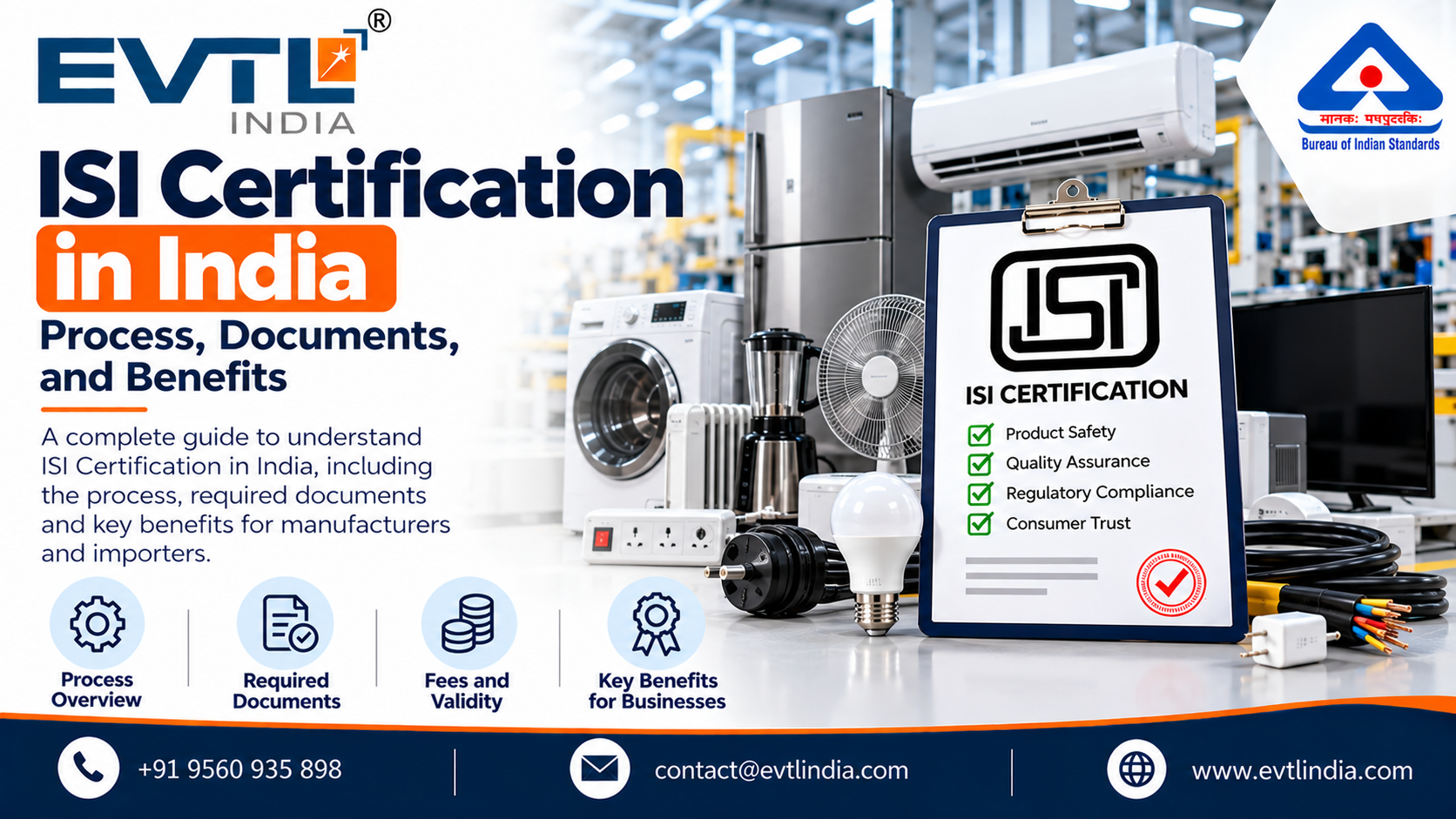
Product quality and safety are important factors in India's manufacturing and trading industries. To ensure that products meet established quality and safety requirements, the Bureau of Indian Standards (BIS) operates a product certification scheme. Under this scheme, manufacturers can obtain a licence to use the ISI Mark on products that comply with the applicable Indian Standards.
ISI Certification is a conformity assessment process through which BIS verifies whether a product meets the requirements of its relevant Indian Standard (IS). It helps manufacturers demonstrate product conformity and gives consumers greater confidence in the quality and safety of certified products.
For certain products, obtaining certification is mandatory under government-issued Quality Control Orders (QCOs). Businesses manufacturing or importing these regulated products must understand the applicable requirements before selling them in the Indian market.
ISI Mark Certification is a product certification scheme operated by BIS under Scheme-I of the BIS (Conformity Assessment) Regulations, 2018. The ISI Mark indicates that a certified product conforms to the requirements of the applicable Indian Standard.
Before granting a licence, BIS evaluates the manufacturer's production facilities, quality control arrangements, testing capabilities and product conformity. The assessment may include factory inspection and product testing through recognised testing arrangements.
Manufacturers receiving approval are authorised to use the ISI Mark within the scope and conditions of their BIS licence. The licence also carries a unique CM/L number that helps identify the certified manufacturer and product.
BIS ISI Certification serves several purposes for manufacturers, businesses and consumers:
Product Quality: Helps establish that products meet the relevant Indian Standard requirements.
Consumer Confidence: Provides assurance that certified products have undergone the prescribed conformity assessment.
Regulatory Compliance: Helps manufacturers comply with applicable Quality Control Orders.
Market Access: Enables businesses to manufacture and sell products covered by mandatory certification requirements, subject to applicable regulations.
Brand Credibility: Demonstrates a manufacturer's commitment to product quality and safety.
Quality Management: Encourages manufacturers to maintain consistent production and testing controls.
Not every product manufactured or sold in India automatically requires an ISI Mark. BIS certification is generally voluntary unless the Central Government makes compliance compulsory through a Quality Control Order or another applicable legal provision.
Several product categories are covered under mandatory certification requirements, including:
Cement and construction materials
Electrical appliances and equipment
Steel and iron products
Household products
Furniture and wood-based products
Automotive components
Chemicals and industrial materials
Various consumer and engineering products
The applicable Indian Standard and implementation date can differ between products. Therefore, manufacturers should verify the latest BIS compulsory certification list and relevant QCO before starting production or commercial sales.
The application and approval process generally involves the following steps:
1. Identify the Applicable Indian Standard
Determine the correct IS number applicable to the product. The product must meet the requirements specified in that standard.
2. Assess Manufacturing Facilities
The manufacturer should have appropriate machinery, production infrastructure, quality control procedures and testing facilities.
3. Prepare Required Documents
Collect the necessary business, manufacturing, technical and quality-related documents before submitting the application.
4. Submit the BIS Application
Apply through the official BIS Manakonline portal under the applicable certification scheme and pay the prescribed fees.
5. Factory Inspection
BIS officials assess manufacturing facilities, production processes, testing arrangements and quality control systems.
6. Product Testing
Product samples are tested to verify conformity with the relevant Indian Standard. Testing arrangements depend on the applicable certification guidelines.
7. Grant of BIS Licence
If the manufacturer and product satisfy the applicable requirements, BIS may grant a licence to use the ISI Mark.
The documents required may vary depending on the product and certification requirements. Common documents include:
Company registration certificate
Manufacturing unit address proof
Factory layout and manufacturing process details
List of manufacturing machinery
Testing equipment details
Quality control personnel information
Product specifications and technical details
Raw material details
Test reports, where applicable
Authorisation letter for the application representative
Complete and accurate documentation helps avoid unnecessary delays during application assessment.
Obtaining a BIS licence involves technical documentation, product testing, factory assessment and regulatory compliance. An experienced ISI Certification Consultant can assist manufacturers in understanding the applicable Indian Standard, identifying documentation requirements and preparing for the certification process.
Consultancy support may include product-standard identification, application documentation, coordination for testing, factory inspection preparation and assistance with responding to BIS observations.
However, the final decision to grant or reject a certification licence rests entirely with BIS. No consultant can guarantee approval without fulfilling the applicable requirements.
EVTL India is one of the leading BIS Consultant in India, helping manufacturers obtain their BIS licences hassle-free. ISI certification plays an important role in maintaining product quality, safety and regulatory compliance in India. Manufacturers should identify the correct Indian Standard, understand applicable QCO requirements and prepare their production and testing facilities before applying.
Whether a business is applying for ISI Mark Certification for the first time or seeking guidance on an existing application, understanding the BIS requirements can make the process more organised and efficient.